Subtitling in the Egyptian Revolution DOI: 10.1080/13556509.2016.1148438 (link to prepublication version at end of post)Mona Baker, The Translator, Volume 22, Number 1, 2016, pages 1-21 Abstract The idea of prefiguration is widely assumed to derive from anarchist discourse; it involves experimenting with currently available means in such a way that they come to mirror or actualise the political ideals that inform a movement, thus collapsing the traditional distinction between means and ends.
Mona Baker This chapter maps out the space of translation within the political economy of contemporary protest movements, using the Egyptian Revolution as a case in point and extending the definition of translation to cover a range of modalities and types of interaction. It identifies themes and questions that arise out of the concrete experiences of activists mobilizing and reflecting on what it means to work for justice, both within and across borders, and to attempt to effect change at home while conversing with others who are fighting similar battles elsewhere.
Translating for Historical Research in Sephardi and Mizrahi Studies by Katharine Halls1 Sephardic Horizons, Volume 6, Number 1, 2016 One of the most exciting developments to come out of the surge of academic interest in Sephardi and Mizrahi Jewry is the recent appearance of two sourcebooks which present documentary material relating to the modern history of these communities in translation. The hugely important volumes to which I refer are Zvi Ben-Dor Benite and Moshe Behar (eds), Modern Middle Eastern Jewish Thought (2013) and Julia Phillips Cohen and Sarah Abrevaya Stein (eds), Sephardi Lives (2014), the former taking as its subject Mizrahi intellectual history from the late 19th century and into the mid-20th century, the latter the daily life of Jews across the “Judeo-Spanish heartland of Southeastern Europe, Anatolia, and the Levant” (p.
Times Literary Supplement 06/09/1996 Can we find equivalents for philosophical terms? If philosophy really is (as its enemies keep saying) just another branch of European literature, still it is a pretty remarkable one. It is cosmopolitan like no other. Even the most rudimentary philosophical library will contain works written in Greek, Latin, French, English and German; and even the most Europhobic philosophers accept, more or less, that they belong to a Pan-European tradition.
A still from the film, Night Watch By Grant Rosenberg/Paris, Time, May 15, 2007 Early on in the 2004 supernatural Russian thriller Night Watch, the protagonist, trying to prevent a witch from casting a spell on his unborn child, yells at the top of his lungs in protest. For English-speaking audiences, the subtitles do more than just translate the literal meaning: the words "no" and "stop" with three exclamation points are shown on different parts of the screen in large, moving letters.
Republican presidential candidates debating in Las Vegas on Dec. 15. A network of volunteer translators in China called the Guojiang Subtitle Group has been posting videos of the debates online with Chinese subtitles. Credit Ruth Fremson/The New York Times Sinosphere
By OWEN GUO, JAN. 3, 2016, The New York Times
BEIJING — From his graduate student dormitory in the southern city of Guangzhou, Yin Hao works late into the night with an online network of about half a dozen other volunteer translators.
DOI: 10.1080/13556509.2015.1069042Richard Jacquemond Published online: 14 Aug 2015 Abstract Through the example of the Arabic translations of Pierre Bourdieu, this article analyses the conditions of the introduction and reception of a sociological thought of French origin in the contemporary Arab intellectual field and, more generally, those of the international circulation of ideas in a postcolonial context. The diachronic analysis reveals the interpenetration of logics of import and export, the differences between intellectual and academic national traditions in various Arab countries, as well as the difficult conditions through which modern works of social sciences are published and circulated in the Arab world.
Middle Eastern Literatures Volume 13, Issue 2, 2010, pages 191-210 Special Issue: Arabic Literature in Egypt at the Beginning of the 20th Century in Search of New Aesthetics: Al-Muwaylihi and Contemporaries DOI: 10.1080/1475262X.2010.487317Samah Selim Along with Ponson du Terrail's Rocambole and Arthur Conan Doyle's Sherlock Holmes, Maurice Leblanc's Arsène Lupin is one of the most famous popular fiction figures in the 20th century Egyptian literary imaginary. The first Arabic translation of Arsène Lupin, Gentleman-Cambrioleur (1907) by essayist and translator ‘Abd al-Qādir Hamza was published in the Egyptian fiction serial The People's Entertainments (Musāmarāt al-sha‘b, 1904-1911) in 1910.
BY MLYNXQUALEY on MARCH 8, 2012 • ( 2 )
The “10 rules” series resumes with award-winning translator Dr. Samah Selim. Eleven Rules 1. Think about register. Every essay, novel or story projects a particular and unique language register. A really important part of translating fiction is capturing and rendering that register in English. It’s easy to fall into the trap of overly stiff or archaic prose on the one hand and too-easy colloquialisms on the other.
Samah Selim re-maps the journey of the early Arab novel
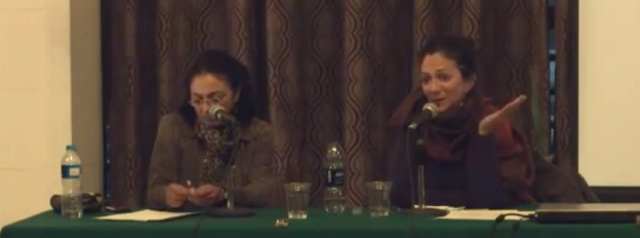
Friday, March 6, 2015 By Laura Gribbon, Jadaliyya Do stories need authors? Are texts fixed? Is adaptation a form of translation? These are some of the questions Professor Samah Selim has been considering in her study of Egyptian periodical Musamarat al-Shaab (The People’s Entertainment), and she raised them during a talk at the American University in Cairo last week.