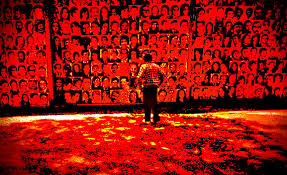
Counterpunch, WEEKEND EDITION MARCH 13-15, 2015 by HAMZA HAMOUCHENE Frantz Fanon died a few months before Algeria’s independence in July 1962. He did not live to see his adoptive country becoming free from French colonial domination, something he believed had become inevitable. This radical intellectual and revolutionary devoted himself, body and soul to the Algerian National liberation and was a prism, through which many revolutionaries abroad understood Algeria and one of the reasons the country became synonymous with Third World revolution.
BY MLYNXQUALEY on FEBRUARY 27, 2015
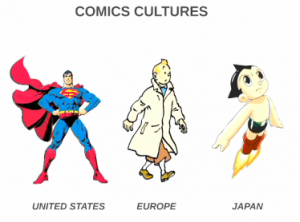
Yesterday at Brown University, scholars and artists met for an afternoon symposium about “Arab Comics: 90 Years of Popular Visual Culture”: In Nadim Damluji’s presentation — “The Violence of Localizing Western Comics for Arab Children” — he began with a slide boiling down recognizably (North) American, European, and Japanese comics. There might well have been a fourth slot on the slide with “Arab” and a question mark over it.
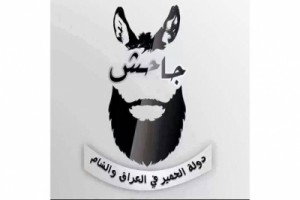
'Da'ish' becomes 'Ja'hish' - "The state of donkeys in Iraq and Syria". By Alice Guthrie on 19/2/15
Arabic translator Alice Guthrie investigates 'Daesh', the new name for ISIS recently adopted by several world leaders because it delegitimises the group's activities. But how can a new name undermine a terrorist organisation? And why do the English-speaking media find the name so difficult to understand?
Over the last few months, there has been a concerted effort by several senior global politicians to give a new name to the group known as ISIS, or Islamic State, IS or ISIL.
DOI: 10.1080/0305764X.2014.991277Helen Colley& Frédérique Guéry Published in:
Cambridge Journal of Education Volume 45, Issue 1, 2015 Special Issue: Evoking and Provoking Bourdieu in Educational Research pages 113-131 Abstract Public spending reductions across the advanced capitalist world are creating new professions that have a ‘hybrid’ status and/or role. However, research on professional learning has paid little attention to them. This qualitative study of one such profession, public service interpreting (PSI), addresses that lacuna.
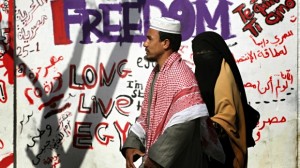
Revolutions in language … a Cairo street scene two days after Hosni Mubarak was ousted from power in 2011. Photograph: John Moore/Getty Images What do words such as 'freedom' or 'coup' mean in Egypt today? One artist is collecting definitions from across a divided nation Patrick Kingsley Cairo
Friday 18 July 2014
as it a coup? Was it a revolution? The overthrow of Mohamed Morsi last July spawned unending debate in Egypt about how the president's removal should be defined.
BY MLYNXQUALEY on FEBRUARY 4, 2015
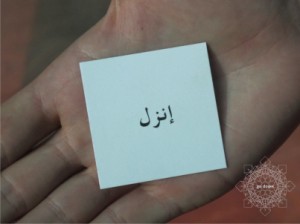
On January 31st, A Dictionary of the Revolution launched a kickstarter to boost the project toward its final phase:
This fund-raising campaign is focused on building the dictionary a digital text and sound archive for the material that Amira Hanafi and her team have collected in the past year. Through one-on-one interviews, leaping off from particular hot-button words, “A Dictionary of the Revolution makes space for viewpoints that are no longer represented in the media or in the Egyptian public.
Monday, 26 January 2015 by Mahmoud Al-Hirthani One field in which Palestinian intellectuals and writers have invested heavily, particularly since the Nakba in 1948, is translation. Interestingly, translating from Russian preceded translation from English due to the early exposure of Palestinian intellectuals to Russian literature, disseminated in Palestine via Russian schools and missionaries during the 19th century. Translation from English started to flourish in the 1920s. While translating from Russian focused on fiction, with translators such as Khalil Baidas as pioneers, translation from English focused more on political works during the British Mandate (1920-1948), influenced by the Pan-Arab awakening against British rule throughout the region.
DOI: 10.1080/14442213.2014.954601 The Asia Pacific Journal of Anthropology, Volume 16, Issue 1, 2015, pages 55-73 Kyung-Nan Koh Abstract This paper examines how businessmen and educators in Hawai'i have semiotically ‘translated’ sustainability to promote sustainability practices. Using data gathered from an educational institute that was co-founded by a corporation and a college, I analyse how the source discourse was, using Silverstein's term, ‘transformed’ so that the target discourse (or the signs used in the target discourse) invokes Hawaiian imageries rather than imageries of capitalism.
Colonial remains and paradoxes in translation between indigenous social movements and supranational bodies DOI: 10.1080/09502386.2014.899379Robert Aman, Cultural Studies, Volume 29, Issue 2, 2015, pages 205-228 Abstract Interculturality is a notion that has come to dominate the debate on cultural diversity among supranational bodies such as the European Union (EU) and the United Nations Educational, Scientific and Cultural Organization (UNESCO) in recent years. The EU goes so far as to identify interculturality as a key cultural and linguistic characteristic of a union which, it argues, acts as an inspiration to other parts of the world.
How to negotiate the many hurdles that stand between a draft paper and publication. Photograph: Clint Hughes/PA Journal editors share their advice on how to structure a paper, write a cover letter - and deal with awkward feedback from reviewers
Overcoming writer’s block: three tips How to write for an academic journal Writing for academic journals is highly competitive. Even if you overcome the first hurdle and generate a valuable idea or piece of research - how do you then sum it up in a way that will capture the interest of reviewers?