Translation Studies
Volume 8, Issue 1, 2015, pages 48-62
DOI: 10.1080/14781700.2014.921238 Serena Bassi
This article considers the construction of the literary fame of Roberto Saviano, author of the 2006 Italian bestseller Gomorra, in the British book marketplace. In order to understand the political import of Saviano's translated author-brand, this analysis utilizes the tools of narrative theory to look at what narratives were created around the authorial personality and what other public narratives and meta-narratives are mobilized to introduce the author to his new reading public.
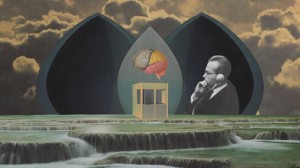
Amelia Barikin, Nikos Papastergiadis, Audrey Yue, Scott McQuire, Ross Gibson; Xin Gu Journal of Intercultural Studies 2014, Vol. 35, No. 4, 349–365. Translation is a key concept for interpreting cross-cultural exchanges. In this article, we track the development of an artistic project that we developed in conjunction with Federation Square Melbourne and Art Centre Nabi in Seoul. It involved the performance of a live telematic dance that occurred in both cities and was transmitted via the use of large screens.
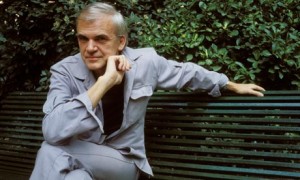
Milan Kundera fears translation could make his style banal. Photograph: Lochon Francois/Gamma/Camera Press LOCHON FRANCOIS/GAMMA/CAMERA PRESS It's time to acknowledge translators – the underpaid and unsung heroes behind the global success of many writers The Observer Tim Parks, Sunday 25 April 2010
Who wrote the Milan Kundera you love? Answer: Michael Henry Heim. And what about the Orhan Pamuk you think is so smart? Maureen Freely. Or the imaginatively erudite Roberto Calasso?
David Charlston Radical Philosophy 186 (Jul/Aug 2014)
David Charlston Most branches of philosophy and many other disciplines in the humanities and social sciences studied in the anglophone academy draw on texts written in languages other than English and therefore rely on the products of translation, especially translations of historical, European philosophy. However, surprisingly little philosophical attention has been paid to the role of individual translators in mediating and relocating philosophical narratives across cultural and linguistic boundaries.
By Geoff Watts
Dec 1 2014 One morning this summer I paid a visit to the sole United Nations agency in London. The headquarters of the International Maritime Organization (IMO) sit on the southern bank of the Thames, a short distance upstream from the Houses of Parliament. As I approached, I saw that a ship’s prow, sculpted in metal, was grafted like a nose to the ground floor of this otherwise bland building.
The world’s most powerful computers can’t perform accurate real-time translation. Yet interpreters do it with ease. Geoff Watts meets the neuroscientists who are starting to explain this remarkable ability. 18 November 2014 Geoff Watts
One morning this summer I paid a visit to the sole United Nations agency in London. The headquarters of the International Maritime Organization (IMO) sit on the southern bank of the Thames, a short distance upstream from the Houses of Parliament.
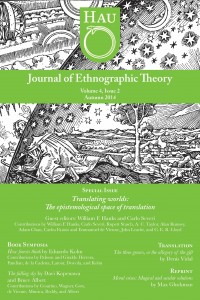
Special Issue of the Journal of Ethnographic Theory Volume 4, Issue 2, 2014 Guest Editors: William P. Hanks and Carlo Severi Table of Contents Special Issue - Introduction Translating worlds: The epistemological space of translation William F. Hanks, Carlo Severi PDF 1–16 Special Issue - Articles The space of translation William F. Hanks PDF 17–39 Transmutating beings: A proposal for an anthropology of thought Carlo Severi PDF 41–71 Powers of incomprehension: Linguistic otherness, translators, and political structure in New Guinea tourism encounters Rupert Stasch PDF 73–94 Healing translations: Moving between worlds in Achuar shamanism Anne-Christine Taylor PDF 95–118 Bilingual language learning and the translation of worlds in the New Guinea Highlands and beyond Alan Rumsey PDF 119–140 Culinary subjectification: The translated world of menus and orders Adam Yuet Chau PDF 141–160 Acting translation: Ritual and prophetism in twenty-first-century indigenous Amazonia Carlos Fausto, Emmanuel de Vienne PDF 161–191 Special Issue - Colloquia Words and worlds: Ethnography and theories of translation John Leavitt PDF 193–220 Special Issue - Forum On the very possibility of mutual intelligibility G.
Edited by Geraldine Brodie, Elena Davitti, Sue-Ann Harding, Dorothea Martens, David Charlston, M. Zain Sulaiman, Alice Casarini, Gloria Kwok Kan Lee TABLE OF CONTENTS Editorial Geraldine Brodie, Elena Davitti, Sue-Ann Harding, Dorothea Martens, David Charlston, M. Zain Sulaiman, Alice Casarini and Gloria Kwok Kan Lee [Editorial] i-v ARTICLES Chaucer Abducted: Examining the Conception of Translation behind the Canterbury TalesJames Hadley, University of East Anglia, UNITED KINGDOM [Abstract] [Article] 1-24 The ‘Permanent Unease’ of Cultural Translation in the Fiction of Guillermo Fadanelli Alice Whitmore, Monash University, AUSTRALIA [Abstract][Article] 25-53 Face Management in Literary Translation Yuan Xiaohui, University of Bristol, UNITED KINGDOM [Abstract][Article] 54-95 Jacques Lacan and the Intrinsic (Un)translatability of Names: “Name” in the English-Chinese Translation of Winterson’s Art & Lies Franziska Cheng, Chinese University of Hong Kong, CHINA [Abstract][Article] 96-119 Integrative Complexity: An innovative technique for assessing the quality of English translations of the Qur’an James W.
DOI: 10.1080/14781700.2014.943677Panagiotis Sakellariou Published online: 27 Aug 2014, in Translation Studies, Taylor & Francis The present article offers a critical account of key applications of the concept of intertextuality for translation-theoretic purposes. It is argued that these applications form part of a reorientation in Western translation studies that involves a significant reconceptualization of both the practice of translation and the role of the translator. Seen from this perspective, the translation-theoretic appropriation of the concept of intertextuality presents itself as a particular moment of a reshaping process in the development of the discipline.
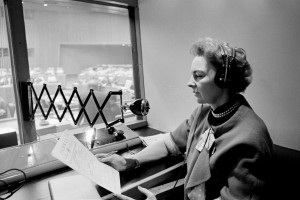
Highly skilled interpreters perform a vital service at UN meetings, where delegates come together to present their views in one of the six official languages or in their own tongue. A UN Interpreter, at work in a booth over looking a meeting room. (1965) UN Photo Feature: UN News Centre 22 September 2014 Out of potential linguistic chaos, a corps of over 100 United Nations interpreters brings order and comprehension as speaker after speaker from around the world takes the podium of the General Assembly to give their annual speeches at the General Debate, discusses war and peace in the Security Council, or delves into arcane details of administrative and budgetary affairs in one of the Assembly’s six specialized committees.