Diverse Expressions of Citizenship and Dissent Edited by Mona Baker & Bolette B. Blaagaard 2016, Routledge Paperback: 9781138847651 Hardback: 9781138847644 Table of contents Reviews Purchasing/ordering options Abstracts Free PDF download available, courtesy of Routledge: Chapter 1: ‘Reconceptualizing Citizen Media: A Preliminary Charting of a Complex Domain‘ by Mona Baker and Bolette B. Blaagaard Citizen Media and Public Spaces presents a pioneering exploration of citizen media as a highly interdisciplinary domain that raises vital political, social and ethical issues relating to conceptions of citizenship and state boundaries, the construction of publics and social imaginaries, processes of co-optation and reverse co-optation, power and resistance, the ethics of witnessing and solidarity, and novel responses to the democratic deficit.
HOW CIVIL RESISTANCE WORKS STELLAN VINTHAGEN
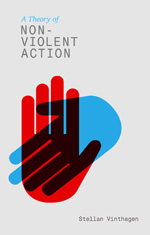
Distributed for Zed Books 224 pages Paper $29.95, ISBN: 9781780325156 Published November 2015 Cloth $95.00, ISBN: 9781780320540 Published November 2015 In this ground-breaking and much-needed book, Stellan Vinthagen provides the first major systematic attempt to develop a theory of nonviolent action since Gene Sharp's seminal The Politics of Nonviolent Action in 1973. Employing a rich collection of historical and contemporary social movements from various parts of the world as examples—from the civil rights movement in America to anti-Apartheid protestors in South Africa to Gandhi and his followers in India—and addressing core theoretical issues concerning nonviolent action in an innovative, penetrating way, Vinthagen argues for a repertoire of nonviolence that combines resistance and construction.
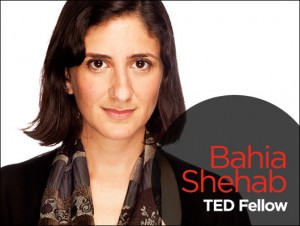
In 2016 Bahia Shehab started an international street campaign celebrating the work of Palestinian poet Mahmoud Darwish. The first intervention was in Vancouver-Canada. In February she sprayed the stanza “Stand at the corner of a dream and fight” in downtown Vancouver. Street expression is no longer tolerated in Cairo. Shehab finds that the work of Darwish is more relevant today with the current political atmosphere in most of the Arab world.
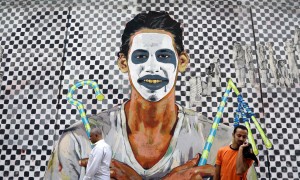
Egyptians walk past graffiti with modern and pharaonic motifs in Mohammed Mahmoud Street near Tahrir Square, Cairo in 2014. The famous wall is being systematically knocked down. Photograph: Hassan Ammar/AP The struggle behind Cairo's revolutionary graffiti wall The graffiti murals that sprang up on the walls of Cairo were a spontaneous reaction to Egypt’s revolution. But, despite their cultural importance, they’re being demolished in an attempt to clean up the city .
[Egyptian medical doctors gather in front of the Medical Doctors Syndicate building in February 2016 to protest police abuse against medical professionals. Photo from elsfha.com]by Abdelrahman Mansour and Mohamed Aboelgheit Jadaliyya, 14 May 2016 Egyptians occupying streets, blocking traffic, and chanting patriotic slogans: Contrary to conventional wisdom, these images became part of Egypt’s contemporary political arena well before the January 2011 Revolution. We saw them on multiple occasions in 2006, 2008, and even in 2010, when Egypt’s national football team won the Africa Cup of Nations.
Special Issue of TWC (Transformative Works and Cultures), Volume 10, 2012 Edited by Henry Jenkins and Sangita Shresthova, University of Southern California Table of Contents Editorial Up, up, and away! The power and potential of fan activism Henry Jenkins, Sangita Shresthova HTML Theory Fandom meets activism: Rethinking civic and political participation Melissa M. Brough, Sangita Shresthova HTML "
Mona Baker This chapter maps out the space of translation within the political economy of contemporary protest movements, using the Egyptian Revolution as a case in point and extending the definition of translation to cover a range of modalities and types of interaction. It identifies themes and questions that arise out of the concrete experiences of activists mobilizing and reflecting on what it means to work for justice, both within and across borders, and to attempt to effect change at home while conversing with others who are fighting similar battles elsewhere.
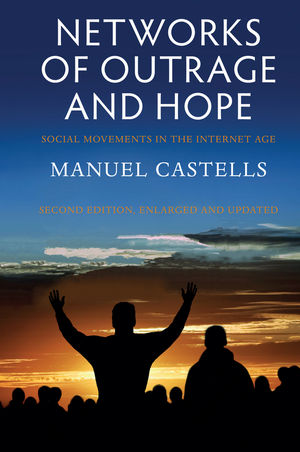
2nd Edition, Manuel Castells, Polity, 2015 Networks of Outrage and Hope is an exploration of the new forms of social movements and protests that are erupting in the world today, from the Arab uprisings to the indignadas movement in Spain, from the Occupy Wall Street movement to the social protests in Turkey, Brazil and elsewhere. While these and similar social movements differ in many important ways, there is one thing they share in common: they are all interwoven inextricably with the creation of autonomous communication networks supported by the Internet and wireless communication.
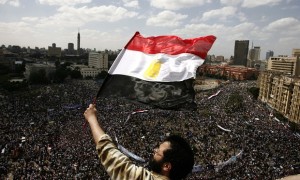
Tens of thousands of Egyptians demonstrate in Cairo’s Tahrir Square in January 2011. Photograph: Misam Saleh/AFP/Getty Images Omar Robert Hamilton The Guardian, Monday 25 January 2016 I didn’t take my camera out with me the night Hosni Mubarak was overthrown. I stood in Tahrir Square among tens of thousands of Egyptians and told myself I would enjoy the moment, I would not divide myself from the night’s magical reality with a lens.
Egyptian pupils play at a school near Cairo Photograph: Hong Wu/Getty Images Egypt may today look like a tragic example of why mass protest is doomed, but the turmoil of the five years since Tahrir Square has unleashed a will for change and a resistance to power among ordinary citizens that could yet transform the country, and maybe the world Jack Shenker
The Guardian, Saturday 16 January 2016
The video is shot from a balcony, and its style is familiar.