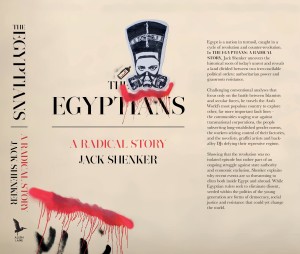
By Jack Shenker A book exploring Egypt's revolution and counter-revolution from below, published by Allen Lane / Penguin - Available now to pre-order - Egypt: 2011-16 “Egypt’s revolutionary turmoil has been misunderstood, and a great deal of that misunderstanding has been deliberate.” Five years on from the start of Egypt’s revolution, and counter-revolution, ‘The Egyptians: A Radical Story’ interrogates the country’s turmoil from below – and argues that its struggles are intimately enmeshed with global patterns of oppression and resistance which stretch well beyond Egypt’s borders.
Republican presidential candidates debating in Las Vegas on Dec. 15. A network of volunteer translators in China called the Guojiang Subtitle Group has been posting videos of the debates online with Chinese subtitles. Credit Ruth Fremson/The New York Times Sinosphere
By OWEN GUO, JAN. 3, 2016, The New York Times
BEIJING — From his graduate student dormitory in the southern city of Guangzhou, Yin Hao works late into the night with an online network of about half a dozen other volunteer translators.
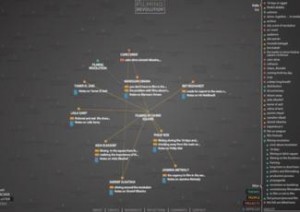
by Anthony Alessandrini Jadaliyya, 19 November 2015 [Alisa Lebow, a filmmaker and film scholar who teaches at the University of Sussex, is the Creator/Director/ Producer/Writer of Filming Revolution, an interactive data-base documentary archive about independent and documentary filmmaking in Egypt since the revolution, which was launched in October 2015.]
Anthony Alessandrini (AA): Could you talk a bit about what made you put together this project: when did you decide to set Filming Revolution in motion, how did the specific form of the project come together, and how did you go about choosing filmmakers, archivists, activists, and artists to interview?
Sociology Lens Paul Gilbert on September 28, 2015 Doubtless I am not alone among the contributors to Sociology Lens in having been exposed, during my first year as an undergraduate, to an array of foundational thinkers in sociology (and anthropology) who present human history as a movement away from ‘traditional’, ‘face–to–face’ or ‘kinship–based’ societies, towards those in which interaction and identity is less relational, and more individualized. Such theorizing is not only limited to the classical sociologists who wrote in the 1900s, like Ferdinand Tönnies and Émile Durkheim; it resurfaces again in the sociology of the 1990s.
Founded by Todd Wolfson, Media Mobilizing Project (MMP) is based in Philadelphia and is an award winning social justice group that uses media to build the power of working people. MMP exists to build a media, education and organizing infrastructure that will cohere and amplify the growing movement to end poverty. We use media to organize poor and working people to tell our stories to each other and the world, disrupting the stereotypes and structures that keep our communities divided.
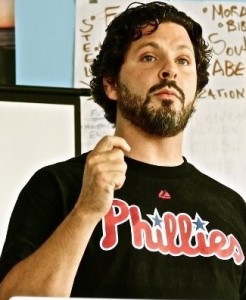
Todd Wolfson Published on Jun 27, 2015 Rutgers SC&I Social Media & Society Cluster Melding virtual and traditional ethnographic practice to explore the Cyber Left's cultural logic, Todd Wolfson maps the social, spatial and communicative structure of the Indymedia network and details its operations on the local, national and global level. He looks at the participatory democracy that governs global social movements and the ways democracy and decentralization have come into tension, and how "
Online organizing and the new era of radical struggle
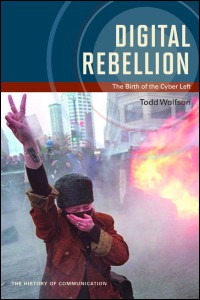
Digital Rebellion examines the impact of new media and communication technologies on the spatial, strategic, and organizational fabric of social movements.
Todd Wolfson reveals how aspects of the mid-1990s Zapatistas movement--network organizational structure, participatory democratic governance, and the use of communication tools as a binding agent--became essential parts of Indymedia and other Cyber Left organizations. From there he uses oral interviews and other rich ethnographic data to chart the media-based think tanks and experiments that continued the Cyber Left's evolution through the Independent Media Center's birth around the 1999 WTO protests in Seattle.
Peter Funke New Media & Society, Volume 16, Number 3, 2014 Todd Wolfson and Peter N Funke Abstract Understanding class as a process of self-making in relation to a particular, historical form of capitalism, in this article we argue that media and communication (from face-to-face and old mediums such as radio to internet-powered tools) must be conceptualized as an emerging structural dimension for class formation. Based on ethnographic fieldwork on the Media Mobilizing Project in Philadelphia, a community-based media and communications infrastructure and a network of organizations across the region, we develop a conceptual approach we call concentric practices, which provides us with a framework of how contemporary class formation is occurring through the use of media and communications.
Triple C: Communication, Capitalism and Critique Volume 10, Number 1, 2012 Abstract Due to the increasingly atomized, isolated nature of social life, as well as the apparent splintering of the working class under neoliberal capitalism, media serve a pivotal infrastructural function for generating the necessary commonality between the fractured sectors of the contemporary working class. This article ethnographically and textually examines how the media driven practices of the Philadelphia-based Media Mobilizing Project helps collectively suture fragmented groups of workers into a class formation that begins to resist and challenge the hegemony of neoliberal practices.
Peter Funke Social Movement Studies, Volume 13, Issue 3, 2014DOI: 10.1080/14742837.2013.831755Peter Nikolaus Funkea & Todd Wolfsonb* pages 349-364 Published online: 19 Sep 2013 Abstract This article starts out by distinguishing between communication and communication mediums when examining social movement-powered formations of collective identity and collective action. We then focus on communication mediums to examine the different ways that old and new media are utilized in urban social movements under neoliberal capitalism.