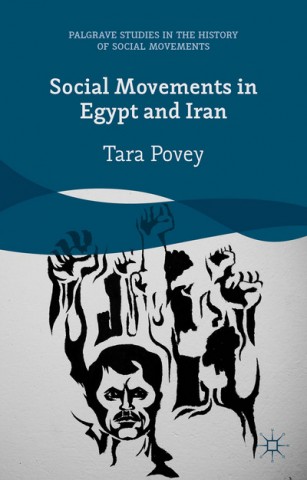
Tara Povey
ISBN 9781137379009 Publication Date March 2015 Formats Ebook (PDF) HardcoverEbook (EPUB) Publisher Palgrave Macmillan Series Palgrave Studies in the History of Social Movements The contemporary movements seen on the streets of the Middle East today have their roots in a rich history of social and political struggle in the region. Since the 1990s, large-scale social movements have mobilised millions in opposition to authoritarian regimes often backed by the West.
Mosireen Subtitling Workshop, 30 April 2014, held at ADEF (Arab Digital Expression Foundation), Cairo
This workshop was held for activist subtitlers, particularly those associated with Mosireen, and coordinated by Katharine Halls, Salma El-Tarzi and Danya Nada. It was delivered by Dr Luis Perez-Gonzalez and introduced by Professor Mona Baker, both from the University of Manchester, UK.
Download the Powerpoint
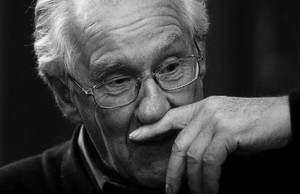
New Left Review 13, January-February 2002 DAVID GRAEBER Is the ‘anti-globalization movement’ anything of the kind? Active resistance is true globalization, David Graeber maintains, and its repertoire of forms is currently coming from the arsenal of a reinvented anarchism. It’s hard to think of another time when there has been such a gulf between intellectuals and activists; between theorists of revolution and its practitioners. Writers who for years have been publishing essays that sound like position papers for vast social movements that do not in fact exist seem seized with confusion or worse, dismissive contempt, now that real ones are everywhere emerging.
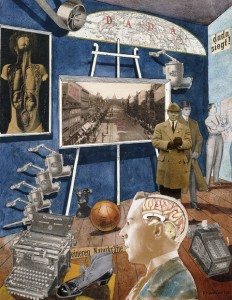
Detail from "Dada Conquers," by Raoul Hausmann.Credit Raoul Hausmann/Bridgeman Images, via Artists Rights Society (ARS), New York, via ADAGP, Paris, 2015 By COSTICA BRADATAN JUNE 30, 2015 6:50 AM The New York Times, Opinionator, The Stone In 1916, Hugo Ball, the German writer who would soon become a founding member of the Dadaist movement, wrote the following account of his first meeting with the men who would be his artistic and philosophical compatriots: “An Oriental-looking deputation of four little men arrived, with portfolios and pictures under their arms: repeatedly they bowed politely.
From beyond the grave, they shape our lives more than they did when they when they were alive. By Costica Bradatan
June 18
The Washington Post
Costica Bradatan is an Associate Professor of Humanities in the Honors College at Texas Tech University. His latest book is "Dying for Ideas: The Dangerous Lives of the Philosophers." Moscow, Oct. 7, 2006. Anna Politkovskaya, a prominent Russian journalist, human rights activist and vocal critic of President Vladimir Putin, was found dead in the elevator of the block of flats where she lived.
By Mike Watson / 03 February 2015
Alain Badiou analyses the events of the Charlie Hebdo attack in their global and national contexts, making the case for the incompatibility of the red flag of communism with the Tricolore of French national identity. 1. Background: the world situation Today the figure of global capitalism has taken over the entire world. The world is subject to the ruling international oligarchy and enslaved to the abstraction of money – the only recognised universal.
This is a transcript of a 1972 conversation between the post-structuralist philosophers Michel Foucault and Gilles Deleuze, which discusses the links between the struggles of women, homosexuals, prisoners etc to class struggle, and also the relationship between theory, practice and power This transcript first appeared in English in the book ‘Language, Counter-Memory, Practice: selected essays and interviews by Michel Foucault’ edited by Donald F. Bouchard.
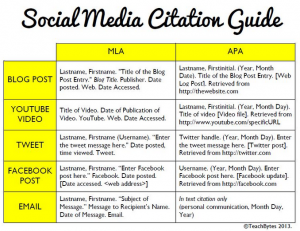
How To Cite Social Media In Research
by TeachThought Staff
Back in 2012, we shared how to cite a tweet.
We followed that up with how to cite an app.
So when we saw the very useful teachbytes graphic above making some noise on pinterest on several different popular #edtech websites, it reminded us of the constant demands changing technologies place on existing ways we do business.
When and in what contexts it makes sense to cite social media content is probably a more relevant post than sharing a graphic that simply shows the format, but they’re both nice to have, yes?
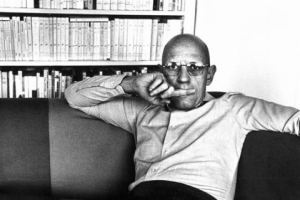
[embed]https://www.youtube.com/watch?v=V0URrVbpjW0&feature=youtu.be[/embed] Michel Foucault first arrived at the University of California, Berkeley in 1975. By this time, he was already a celebrity in France. He had just published his enormously influential history and critique of the penal system, Discipline and Punish, and he occupied a position at the prestigious Collège de France as chair in the “history of systems of thought,” a position he created for himself. But when he arrived on the West Coast, writes Marcus Wohlsen, “few at Berkeley had heard of Michel Foucault.