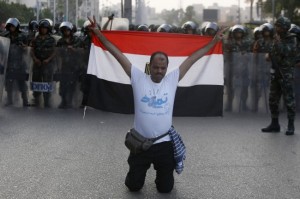
Special Issue for Journal of Cultural Research Volume 19, Issue 2, 2015
Foreword Anastasia Valassopoulos pages 115-116 Acknowledgements page 117 Introduction: Egyptian women, revolution, and protest culture Dalia Said Mostafa pages 118-129 Action, imagination, institution, natality, revolution Ziad Elmarsafy pages 130-138 Egypt’s revolution, our revolution: revolutionary women and the transnational avant-garde Caroline Rooney pages 139-149 Inserting women’s rights in the Egyptian constitution: personal reflections Hala Kamal pages 150-161 Egyptian women, revolution and the making of a visual public sphere Fakhri Haghani pages 162-175 A multimodal analysis of selected Cairokee songs of the Egyptian revolution and their representation of women Nadia A.
Cristina Cielo
(Sawyer Seminar Series, University of the Witwatersrand, Johannesburg)
Popular uprisings in the Middle East over the last months have transformed the political landscapes and possibilities of the region's diverse nations. The hope engendered by the successful mobilizations against the Tunisian and Egyptian governments has darkened as reports emerge of the repression and violence that meet continuing protests in other parts of the region. Uruguayan intellectual and journalist Raúl Zibechi gives us a South American perspective of the momentous changes taking place in North Africa.
December 20th, 2013 Open Culture Michel Foucault first arrived at the University of California, Berkeley in 1975. By this time, he was already a celebrity in France. He had just published his enormously influential history and critique of the penal system, Discipline and Punish, and he occupied a position at the prestigious Collège de France as chair in the “history of systems of thought,” a position he created for himself.
Gilles Deleuze's ABC Primer, with Claire Parnet, Directed by Pierre-André Boutang (1996) Full reference to published set of DVDs: Deleuze, Giles (1996/2011) Gilles Deleuze from A-Z, with Claire Parnet, directed by Pierre-André Boutang, translated by Charles J. Stivale, Cambridge, MA: MIT Press. Overview prepared by Charles J. Stivale, Romance Languages & Literatures, Wayne State University A as in Animal, B as in 'Boire' <Drink>, C as in Culture, D as in Desire, E as in 'Enfance' <Childhood>, F as in Fidelity, G as in 'Gauche' <Left>, H as in History of Philosophy, I as in Idea, J as in Joy, K as in Kant, L as in Literature, M as in 'Maladie' <Illness>, N as in Neurology, O as in Opera, P as in Professor, Q as in Question, R as in Resistance, S as in Style, T as in Tennis, U as in 'Un'/One, V as in 'Voyage'/Trip, W as in Wittgenstein, X,Y as unknown, Z as in Zigzag DeleuzeA-Z Downloaded fromhttp://truthbeauty.
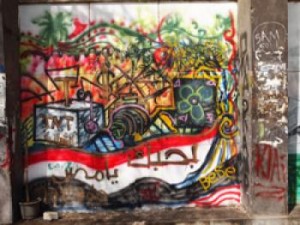
Preview of Mark Nickolas documentary film Nefertiti's Daughters, featuring some of the most interesting street artists in Egypt. LOG LINE: Queen Nefertiti returns to join revolutionary street artists on the front lines in the fight for women’s rights and freedom in Egypt.
SYNOPSIS: Nefertiti’s Daughters is a story of women, art and revolution. Told by prominent Egyptian artists, this documentary witnesses the critical role revolutionary street art played during the Egyptian uprisings.
Informations sur cette image
Crédits : DR CEDEJ
ISBN 9782905838858 Troisième série | n° 12/// 2015 Evolution des systèmes médiatiques après les révoltes arabes Nouvelles directions de recherche Changes in the media system after the Arab revolts: New research directions Sous la direction de Enrico De Angelis
The Arab revolts have forced us to re-evaluate our theoretical approaches and many of our assumptions on the role of media in the Arab region.
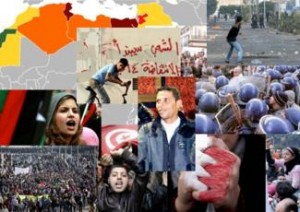
[Collage by Jadaliyya. Images from unknown source] by Asef Bayat
Mar 03 2011
Serious concerns are expressed currently in Tunisia and Egypt about the sabotage of the defeated elites. Many in the revolutionary and pro-democracy circles speak of a creeping counter-revolution. This is not surprising. If revolutions are about intense struggle for a profound change, then any revolution should expect a counterrevolution of subtle or blatant forms. The French, Russian, Chinese, Iranian, and Nicaraguan revolutions all faced protracted civil or international wars.
Cihan Tuğal
Berkeley Journal of Sociology
7 October 2014 When revolutionaries do not produce ideology, demands, and leaders, does this mean that the revolt will have no ideology, demands, and leaders? Cihan Tuğal discusses the limits and traps of Egypt’s “leaderless revolution” in light of the nation’s current military rule. In June 2013, millions of Egyptians mobilized against a clumsy autocrat, the elected dictator Morsi. The rallying cry was “a second revolution,” referring back to the toppling of Mubarak as the first one.
"Peoples Library Occupy Wall Street 2011 Shankbone" by David Shankbone - Own work. Licensed under CC BY 3.0 via Wikimedia Commons. Jonathan M. Smucker
October 7, 2014,
Berkeley Journal of Sociology
Occupy Wall Street participant Jonathan Smucker takes a critical look at the movement’s “prefigurative politics” through the theoretical lenses of Gramsci and Habermas. What is politics? In this essay, I examine so-called “prefigurative politics” as it played out in Occupy Wall Street (OWS)—through Gramscian and Habermasian theoretical lenses.
Counterpunch, WEEKEND EDITION MARCH 13-15, 2015 by HAMZA HAMOUCHENE Frantz Fanon died a few months before Algeria’s independence in July 1962. He did not live to see his adoptive country becoming free from French colonial domination, something he believed had become inevitable. This radical intellectual and revolutionary devoted himself, body and soul to the Algerian National liberation and was a prism, through which many revolutionaries abroad understood Algeria and one of the reasons the country became synonymous with Third World revolution.