By Ahmed Refaat Mada Masr, 15 March 2015 I first heard Mona Baker two months ago in a workshop organized by the Imaginary School Program at Beirut, the art space not the city. It was called: “Prefigurative politics and creative subtitling.”
During the three-hour event, Baker briefly summed up what she discusses more elaborately in her research project, “Translating the Egyptian Revolution,” which “examines the language-based practices that allow Egyptian protesters to contest dominant narratives of the revolution and, importantly, to connect with, influence and learn from global movements of protest.
Voices Across Borders
The Blog of the Race and Resistance Research Network at TORCH
Posted by: Josh Aiken and Nicole Nfonoyim-Hara
Date: 26 February 2015
Ferguson: Transnational Activism and The Academy
The following is a transcript of presentations at the Race and Resistance seminar on 30th January 2015, at which Master’s students Josh Aiken and Nicole Nfonoyim-Hara reflected on the relationship between their studies at Oxford, transnational solidarity movements, and their activism protesting the killing of Michael Brown.
Published on Mar 4, 2015 Leil-Zahra Mortada talks about the problems with sexual harassment during the Egyptian Revolution, especially on Tahrir Square, and explains why they felt the need to do something about it. He confronts the problems they faced with the OpAntiSH movement.
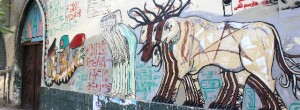
Egypt Independent Mohamed Mostafa Egypt's customs services in Alexandria have seized 400 copies of "Walls of Freedom", a book depicting Egypt's street graffitti art in the context of the 2011 uprising, for “instigating revolt,” says the Finance Ministry. Ahmed al-Sayyad, the ministry’s undersecretary, told Al-Masry Al-Youm that the book contains elements that give "advice on confronting police and army forces,” therefore a cause for concern.
Marianne Maeckelbergh argues that one of the global justice movement's key innovations has been its approach to democratic decision-making December 2009, in Red Pepper It was getting late on day two of seemingly hopeless meetings. The assembly hall was full, but the energy with which the discussion began was waning fast. People had travelled to Paris from across Europe for this European Social Forum (ESF) planning meeting, but the pressure of the task at hand was starting to weigh heavily.
By the ROAR Collective, www.roarmag.orgSeptember 13th, 2013
Occupy theorists launch militant research handbook A collaborative project seeks to redefine the place where activism and academia meet by promoting militant research in, about and with the movements. Natalie Bookchin, Pamela Brown, Suzahn Ebrahimian, Colectivo Enmedio, Alexandra Juhasz, Leónidas Martin, MTL, Nicholas Mirzoeff, Andrew Ross, A. Joan Saab, Marina Sitrin.
Welcome to The Militant Research Handbook! It’s designed to help you answer the question: what is militant research?
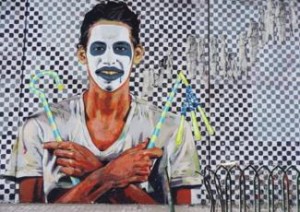
[Late graffiti artist Hisham Rizq, killed in July 2014, painted by Ammar Abu Bakr. Captured 12 September 2014]By Mona Abaza, 25 January 2015 Clearly Cairene graffiti has lost momentum during this year. Having been the faithful barometer of the revolution over the past three years, graffiti has recently faced transmutations and drawbacks that run parallel with the political process of restoring “order” in the street. The heartbreaking story of the recent death of a cheerful and bright young graffiti artist, nineteen-year-old Hisham Rizq, completes this sad picture.
Heba Afify, a Mada Masr reporter. Photograph: David Degner Mada Masr was formed just before military coup of 2013. Amid growing censorship, its staff have risked their lives to continue reporting. Can they stay true to their mission? Leslie T Chang
Tuesday 27 January 2015
On the afternoon of 17 June 2013, a group of friends gathered in a fourth-floor apartment in downtown Cairo. They sat on the floor because there were no chairs; there were also no desks, no shelves, and no ashtrays.
Photo by: Laura Gribbon. Alaa Awad's work on Mohamed Mahmoud Street Cultural producers who gained fame after the revolution Sunday, January 25, 2015 - 09:53 By: Rowan El Shimi; Laura Gribbon; Amany Ali Shawky
We take a look at the trajectories of four cultural producers who gained fame during or after the January 25 revolution and find out what they're doing now.
Elements of Visual Advocacy The first edition of Visualising Information for Advocacy was published in October 2013 and to mark the one year anniversary we have released the second edition for free. Of course, you can still order a physical copy of our book through either our Big Cartel Storeor Amazonand if you write a blog postabout the book, we'll send you a copy for free! VISUALISING INFORMATION FOR ADVOCACY TACTICAL TECHNOLOGY COLLECTIVE Visualising Information for Advocacy is a book about how advocates and activists use visual elements in their campaigns.