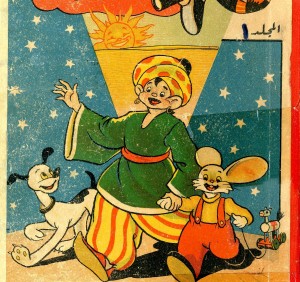
Soraya Morayef / 18 Nov 2014 Comic magazines Samir, Lulu and Mickey Geeb (Pocket-sized Mickey) and Arabic translations of Tintin, Superman and Asterix and Obelix have been read and loved by generations of Arabs. Editorial cartoons are fundamental parts of every daily newspaper. But comic art remains an often unexamined and under-supported part of Arab artistic effort.
A new initiative is intent on changing that.
In September, the American University in Beirut (AUB) began a new academic program focused entirely on the study, archiving and promotion of Arab comic art.
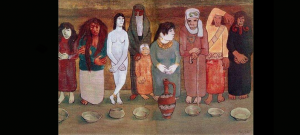
Abdul Hadi El Gazzar’s - The Theatre of Life and Hunger (1952) (Courtesy of The AMCA Project's Pinterest Account) By: Sultan Al Qassemi 31 October 2014
Egyptian artists were deeply involved in spearheading, capturing, and influencing the January 2011 uprising. In fact, the artistic community lost one of its own when 32-year-old Ahmed Bassiouny died in the early days of the uprising while taking part in the protests. For four days, the contemporary digital artist and experimental musician documented the protests in videos, which were then posted online each evening.
Marcia Lynx Qualey Last updated: 28 September 2014 Why are gentleman-thieves and murder mysteries making a comeback in Arabic popular fiction? When Egyptian novelist and photographer Ahmed Mourad was asked earlier this year, why so few Egyptians were writing crime novels, he said that the genre was new, "and anything new is usually accompanied by a lot of attack and criticism". Then Mourad paused and corrected himself by saying, in fact, the genre was not new at all.
The neo-noir revolution in the Arab world might be seen as nostalgic, but it allows writers to act as ombudsmen in the current political climate Jonathan Guyer Friday 3 October 2014 From Baghdad to Cairo, a neo-noir revolution has been creeping across the Middle East. The revival of crime fiction since the upheavals started in 2011 should not come as a surprise. Noir offers an alternative form of justice: the novelist is the ombudsman; the bad guys are taken to court.
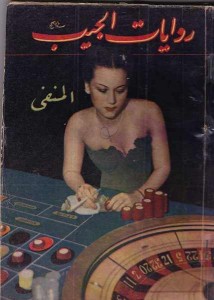
Pocket Novels: The Exile, J. Kessel, 1940. “A Novel of Human Untruths, about a Russian woman and her princesses, in exile, from the pen of the great French writer J. Kissel,” presumably the French novelist and journalist Joseph Kessel (1898-1979) August 20, 2014 | by Jonathan Guyer Cairo: the metal detector beeps. The security man wears a crisp white uniform. He nods and leans back in his chair. The lobby’s red oriental carpet, so worn it’s barely red, leads upstairs to the hotel tavern.
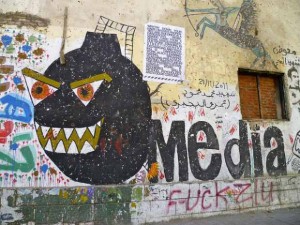
Street art from Mohamed Mahmoud Street, Cairo. (Photo: Melody Patry/Index on Censorship) Graffiti artists face threats of violence, and the potential of jail time and fines under a proposed draft law
By Shahira Amin / 22 August, 2014
Before the January 2011 uprising, street art was little known in Egypt. Then came the revolution and with it, an outburst of creativity. With the fall of the authoritarian regime of Hosni Mubarak, Egyptian artists who had routinely faced censorship restrictions under his autocratic rule, felt a strong urge to break out of the confines of their studios and reclaim public spaces.