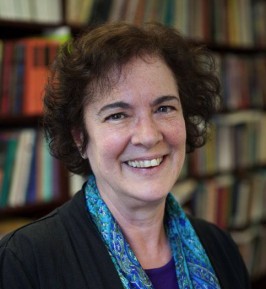
The American University in Cairo School of Humanities and Social Sciences 31 October 2015 “A Settler-Colonialism of Her Own: Imagining Palestine’s Alternatives” Lila Abu-Lughod Professor of Anthropology, Women’s and Gender Studies, Columbia University Saturday, October 31, 2015 • 6 pm Oriental Hall AUC Tahrir Square For more information Department of English and Comparative Literature eclinfo@aucegypt.edu • tel 20.2.2615.1628
Published on Apr 5, 2013 EDWARD SAID (1935-2003). Palestinian-born intellectual and world-famous literary critic. Author of 'Orientalism' and 'The Question of Palestine'. Professor of English Literature at Columbia University, NYC until his death. From the BBC series 'Exiles'.
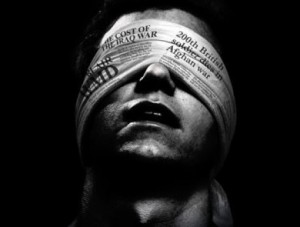
by John Pilger 11 September 2014
Editor's note: The following article is adapted from John Pilger's Edward Said Memorial Lecture, delivered in Adelaide, Australia, on 11 September 2014.
"There is a taboo," said the visionary Edward Said, "on telling the truth about Palestine and the great destructive force behind Israel. Only when this truth is out can any of us be free."
For many people, the truth is out now.
M. Lynx Qualey Fourteen hundred years ago and more, the poet-prince Imru’ al-Qais was banished by his father. The king exiled his son, or so the legend goes, in part because of the prince’s poetry. Thus it was that, when the king was killed by a group of his subjects, al-Qais was traveling with friends. Al-Qais returned to avenge his father’s death, but afterward spent the rest of his life in exile, fleeing from place to place, writing poetry and seeking support to regain his father’s throne.
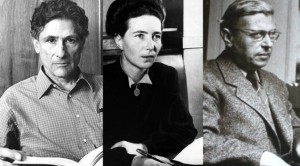
AUGUST 26, 2014 EUGENE WOLTERS In 1979, Edward Said was invited by Jean-Paul Sartre and Simone de Beauvoir to France for a conference on Middle East peace. It was in the wake of the Camp David Accords that ended the war between Egypt and Israel, that the author of “Orientalism” and ardent supporter of the Palestinian people, was invited to contribute with other prominent thinkers.
Said offered effusive praise for Sartre when recounting his adventure, writing for the London Review of Books: