BY MLYNXQUALEYonJULY 22, 2015 In Mourid Barghouti’s seminal memoir, I Saw Ramallah, he writes about the loss of his private days — namely his birthday and his anniversary — as author Ghassan Kanafani was assassinated on the date of the first, and cartoonist Naji al-Ali on the second: From I Saw Ramallah:
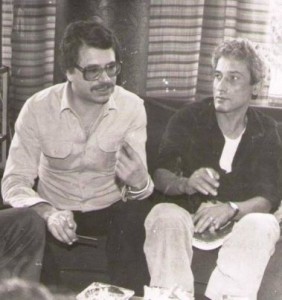
I got to know Naji in 1970 in Kuwait. He was the cartoonist of al-Siyasanewspaper, and I used to spend some evenings in his small office.
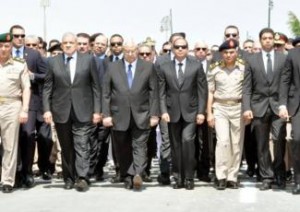
[President Abdel-Fattah Al-Sisi and government officials at the funeral of Prosecutor General Hisham Barakat who was killed in a car bomb attack on 29 June 2015. Source: Official Facebook Page of the Spokesperson of the Egyptian Armed Forces.]by Sarah Carr 2 July 2015, Jadaliyya The prevailing characteristic of the time before the revolution, all those moons ago, was Egypt’s political moribundity.
There were elections of sorts, or at least votes went in ballot boxes but their provenance was not always from voters.
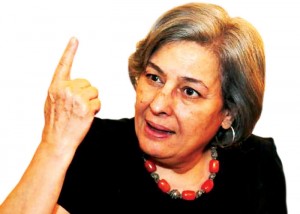
Publishing house Shorouk marks birth anniversary of Egyptian novelist and critic Radwa Ashour by reissuing five of her books. 2015/06/12 Issue: 9 Page: 21 The Arab Weekly Mona Anis The publishing house Shorouk marked the anniversary of the birth of Egyptian novelist and critic Radwa Ashour by reissuing five of her books. Ashour’s death last December created waves of sadness among the community of writers in Egypt and beyond, especially in Palestine where she was much admired for her unwavering support of the struggle of the Palestinians and the right of return for those driven out of their homes in 1948.
Yasmin El-Rifae
June 12th, 2015, Muftah I walked through downtown Cairo on a quiet Friday morning in March 2015, late to a conference I had helped organize and a little bit anxious. The conference was about the political importance of translation – of language and concepts – in connecting protest movements to one another and allowing them to be narrated from within. We had tried to make the conference sound mundane to state authorities, who had issued our permits, but I was not entirely sure it would work.
The right to equal opportunities for women Wednesday, May 27, 2015 By Mai Shams El-Din After the ouster of former President Hosni Mubarak, a group of feminist activists stood at the heart of Tahrir Square and made several demands concerning women’s rights and freedoms. They were met by insults and curses from passers-by and criticism from others, who maintained this was not the time for a conversation about women’s rights.
22-23 September 2014 Conference held at the CBRL British Institute in Amman. 1 The Political Subject in the 'Arab Spring' | Keynote | Philip Marfleet | 22 Sept 2014 2 Gender and Revolution: Historical Patterns and Challenges … | Ahmed Kadry
3 As if in Manama: Real-time Exile, New Diaspora Politics, and Living Bahrain Abroad | Omar Sirri
4 Developing Diaspora Politics in the Egyptian Revolution … | Helen Underhill
Call for Articles—Alif 38, 2018
Guest-edited by Mona Baker
Abstract deadline: October 1, 2016
Article submission deadline: May 1, 2017
The point of departure for this special issue of Alif is that knowledge is ‘produced’ rather than ‘discovered’, and that translation is a core mechanism for the production and circulation of all forms of knowledge. This topic has received relatively limited attention in translation studies to date, and even less in related disciplines such as cultural studies and the history of ideas.
Special Issue for Journal of Cultural Research Volume 19, Issue 2, 2015
Foreword Anastasia Valassopoulos pages 115-116 Acknowledgements page 117 Introduction: Egyptian women, revolution, and protest culture Dalia Said Mostafa pages 118-129 Action, imagination, institution, natality, revolution Ziad Elmarsafy pages 130-138 Egypt’s revolution, our revolution: revolutionary women and the transnational avant-garde Caroline Rooney pages 139-149 Inserting women’s rights in the Egyptian constitution: personal reflections Hala Kamal pages 150-161 Egyptian women, revolution and the making of a visual public sphere Fakhri Haghani pages 162-175 A multimodal analysis of selected Cairokee songs of the Egyptian revolution and their representation of women Nadia A.
BY MLYNXQUALEY on APRIL 20, 2015
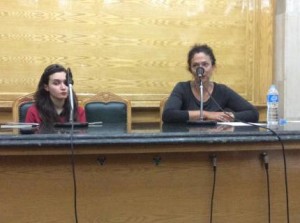
Samah Selim spoke at Cairo University last Thursday, at a talk moderated by Nada Abdel Sobhi, on “Why We Transate: Some Notes on Love, Loss, and Longing.” Mona Elnamoury was there:By Mona ElnamouryIn her talk at Cairo University last Thursday, Samah Selim charmed the audience with her hearty genuine talk about translation and love. Selim came to talk about translation in general as well as her current project: Arwa Saleh’s non-fiction book Al-Mubtasarun: dafatir wahda min gil al-haraka al-tullabiyya, which was published in 1997, the same year its author took her life.
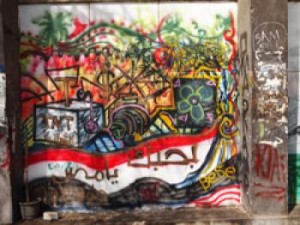
Preview of Mark Nickolas documentary film Nefertiti's Daughters, featuring some of the most interesting street artists in Egypt. LOG LINE: Queen Nefertiti returns to join revolutionary street artists on the front lines in the fight for women’s rights and freedom in Egypt.
SYNOPSIS: Nefertiti’s Daughters is a story of women, art and revolution. Told by prominent Egyptian artists, this documentary witnesses the critical role revolutionary street art played during the Egyptian uprisings.