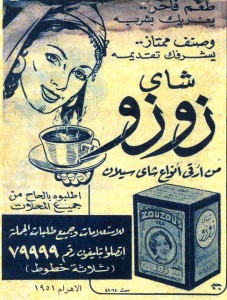
Adrian Gully Journal of Arabic and Islamic Studies, Volume 1, 1996-97, pp. 1-49 This article explores the discourse of commercial consumer advertising in the written and visual media of Egypt. After setting advertisements in the context of genres and schemas, it focuses mainly on the relationship between language and cultural representation within the discourse of advertising. The paper places special emphasis on the role of intertextuality within the advertising framework. It also assesses the effectiveness of using different language levels in a given advertisement or commercial, and looks at the deployment of rhetorical devices to reinforce the advertising message.
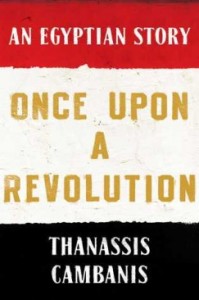
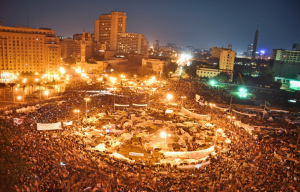
When the Sun Falls over Tahrir 28 March 2015 SOMETIME IN THE SUMMER of 2011, I was sitting with a few friends at a café on the edge of a cliff overlooking Cairo. We were smoking shisha and drinking tea and beer, watching the sun set over the taupe tableau when we spotted two tall, blond men on the other side of the terrace with a digital camera, filming the sun’s descent through the smog.
Informations sur cette image
Crédits : DR CEDEJ
ISBN 9782905838858 Troisième série | n° 12/// 2015 Evolution des systèmes médiatiques après les révoltes arabes Nouvelles directions de recherche Changes in the media system after the Arab revolts: New research directions Sous la direction de Enrico De Angelis
The Arab revolts have forced us to re-evaluate our theoretical approaches and many of our assumptions on the role of media in the Arab region.
[Collage by Jadaliyya. Images from unknown source] by Asef Bayat
Mar 03 2011
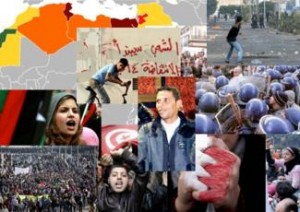
Serious concerns are expressed currently in Tunisia and Egypt about the sabotage of the defeated elites. Many in the revolutionary and pro-democracy circles speak of a creeping counter-revolution. This is not surprising. If revolutions are about intense struggle for a profound change, then any revolution should expect a counterrevolution of subtle or blatant forms. The French, Russian, Chinese, Iranian, and Nicaraguan revolutions all faced protracted civil or international wars.
Cihan Tuğal
Berkeley Journal of Sociology
7 October 2014 When revolutionaries do not produce ideology, demands, and leaders, does this mean that the revolt will have no ideology, demands, and leaders? Cihan Tuğal discusses the limits and traps of Egypt’s “leaderless revolution” in light of the nation’s current military rule. In June 2013, millions of Egyptians mobilized against a clumsy autocrat, the elected dictator Morsi. The rallying cry was “a second revolution,” referring back to the toppling of Mubarak as the first one.
Counterpunch, WEEKEND EDITION MARCH 13-15, 2015 by HAMZA HAMOUCHENE Frantz Fanon died a few months before Algeria’s independence in July 1962. He did not live to see his adoptive country becoming free from French colonial domination, something he believed had become inevitable. This radical intellectual and revolutionary devoted himself, body and soul to the Algerian National liberation and was a prism, through which many revolutionaries abroad understood Algeria and one of the reasons the country became synonymous with Third World revolution.
26 March 2015 Salle des thèses Bernard Maris, Espace Deleuze Université Paris 8 - Vincennes-Saint-Denis One of the most remarkable accomplishments of the revolutionary spirit in Egypt since January 2011 has manifested itself in an unprecedented production and proliferation of cultural materials, whether written, oral, visual, or performative, all of which have decidedly remapped and redefined not just the contours and meanings of both public culture and public space but more specifically, for the purposes of this symposium, the strategies, problems, limits, and challenges of translating this cultural production to a global audience.
By Ahmed Refaat Mada Masr, 15 March 2015 I first heard Mona Baker two months ago in a workshop organized by the Imaginary School Program at Beirut, the art space not the city. It was called: “Prefigurative politics and creative subtitling.”
During the three-hour event, Baker briefly summed up what she discusses more elaborately in her research project, “Translating the Egyptian Revolution,” which “examines the language-based practices that allow Egyptian protesters to contest dominant narratives of the revolution and, importantly, to connect with, influence and learn from global movements of protest.
By Ahmed Refaat Mada Masr, 15 March 2015 I first heard Mona Baker two months ago in a workshop organized by the Imaginary School Program at Beirut, the art space not the city. It was called: “Prefigurative politics and creative subtitling.”
During the three-hour event, Baker briefly summed up what she discusses more elaborately in her research project, “Translating the Egyptian Revolution,” which “examines the language-based practices that allow Egyptian protesters to contest dominant narratives of the revolution and, importantly, to connect with, influence and learn from global movements of protest.
Published on Mar 4, 2015 Leil-Zahra Mortada talks about the problems with sexual harassment during the Egyptian Revolution, especially on Tahrir Square, and explains why they felt the need to do something about it. He confronts the problems they faced with the OpAntiSH movement.