Published on Mar 4, 2015 Leil-Zahra Mortada talks about the problems with sexual harassment during the Egyptian Revolution, especially on Tahrir Square, and explains why they felt the need to do something about it. He confronts the problems they faced with the OpAntiSH movement.
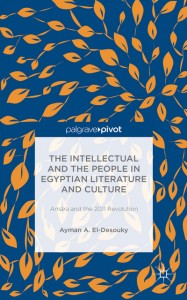
Amāra and the 2011 Revolution Ayman A. El-Desouky
Hardcover (160 pages)
£45.00 + delivery
Permissions Request Libraries - add to your ebook collection on Palgrave Connect ISBN 9781137392435 Publication Date November 2014 Formats Hardcover Ebook (EPUB) Ebook (PDF) Publisher Palgrave Pivot The challenges of social cohesion and the radical possibilities of solidaristic action are among the most pressing issues on the global scene today.
Alia Mossallam Mada Masr, Wednesday, September 17, 2014 About a month ago I went to visit a friend in prison.
It doesn’t matter who he or she was, since there are now hundreds of young men and women in Egypt’s prisons because of the new Protest Law. The prisons are full to the brim with teenagers, students, fathers, brothers, daughters and only sons.
Egypt Independent Mohamed Mostafa Egypt's customs services in Alexandria have seized 400 copies of "Walls of Freedom", a book depicting Egypt's street graffitti art in the context of the 2011 uprising, for “instigating revolt,” says the Finance Ministry. Ahmed al-Sayyad, the ministry’s undersecretary, told Al-Masry Al-Youm that the book contains elements that give "advice on confronting police and army forces,” therefore a cause for concern.
Posted on Saturday, 7 February, 2015 by amroali I have been absolutely gutted since Shimaa ELSabbagh was killed by security forces two weeks ago as she headed to Tahrir Square to lay flowers on the eve of the fourth anniversary of the 2011 Egyptian revolution. While I never personally knew Shimaa, we shared numerous common friends who have been in tears and heartache since that tragic afternoon. Many will ask why focus on Shimaa when other protesters also die.
on 07 Novembre 2014.
Interview with OMAR ROBERT HAMILTON (MOSIREEN COLLECTIVE) - by SARA MARCHESI and DUCCIO SCOTINI “We trust to each other's strength. Or we did. And we were strong, undefeatable, once. Now, more than ever, we must find that strength, that trust. If you ever saw hope in this revolution, if you ever gave someone a cigarette on a march, if you ever went home with ideas burning brighter than the tear gas in your lungs then now is the time to find that trust again.
Revolutions in language … a Cairo street scene two days after Hosni Mubarak was ousted from power in 2011. Photograph: John Moore/Getty Images What do words such as 'freedom' or 'coup' mean in Egypt today? One artist is collecting definitions from across a divided nation Patrick Kingsley Cairo
Friday 18 July 2014
as it a coup? Was it a revolution? The overthrow of Mohamed Morsi last July spawned unending debate in Egypt about how the president's removal should be defined.
BY MLYNXQUALEY on FEBRUARY 4, 2015
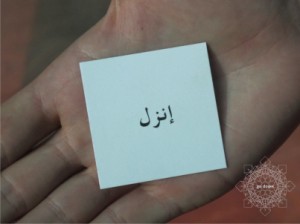
On January 31st, A Dictionary of the Revolution launched a kickstarter to boost the project toward its final phase:
This fund-raising campaign is focused on building the dictionary a digital text and sound archive for the material that Amira Hanafi and her team have collected in the past year. Through one-on-one interviews, leaping off from particular hot-button words, “A Dictionary of the Revolution makes space for viewpoints that are no longer represented in the media or in the Egyptian public.
WIAM EL-TAMAMI 28 JANUARY 2015 I left Cairo on 19 April 2014. I was so glad to have left, so relieved and slightly disbelieving that I had finally loosened myself from the grip of Al-Qaahira – in Arabic the name, quite fittingly, means ‘The Oppressor’, ‘The Crusher’, ‘The Vanquisheress’.
I knew that I could not be there then, but that I was inextricably bound to her: I could, I would, always come back.
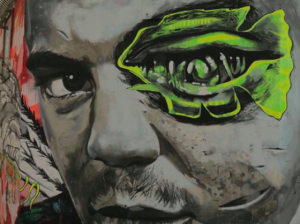
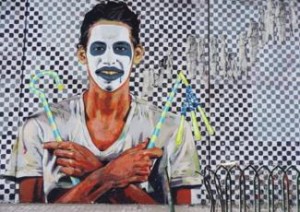
[Late graffiti artist Hisham Rizq, killed in July 2014, painted by Ammar Abu Bakr. Captured 12 September 2014]By Mona Abaza, 25 January 2015 Clearly Cairene graffiti has lost momentum during this year. Having been the faithful barometer of the revolution over the past three years, graffiti has recently faced transmutations and drawbacks that run parallel with the political process of restoring “order” in the street. The heartbreaking story of the recent death of a cheerful and bright young graffiti artist, nineteen-year-old Hisham Rizq, completes this sad picture.