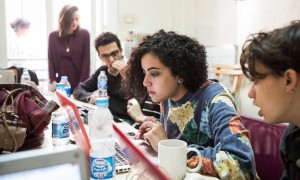
Heba Afify, a Mada Masr reporter. Photograph: David Degner Mada Masr was formed just before military coup of 2013. Amid growing censorship, its staff have risked their lives to continue reporting. Can they stay true to their mission? Leslie T Chang
Tuesday 27 January 2015
On the afternoon of 17 June 2013, a group of friends gathered in a fourth-floor apartment in downtown Cairo. They sat on the floor because there were no chairs; there were also no desks, no shelves, and no ashtrays.
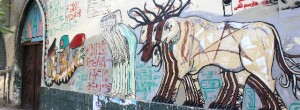
Photo by: Laura Gribbon. Alaa Awad's work on Mohamed Mahmoud Street Cultural producers who gained fame after the revolution Sunday, January 25, 2015 - 09:53 By: Rowan El Shimi; Laura Gribbon; Amany Ali Shawky
We take a look at the trajectories of four cultural producers who gained fame during or after the January 25 revolution and find out what they're doing now.
Asef Bayat Sunday, January 25, 2015 Things in the Middle East usually appear far worse than they really are when looked at from the outside. But on my recent visit to Egypt — as I talked and listened to people, watched local television, read daily papers and made observations — it became clear that revolutionaries were going through painful times. A deep disenchantment seemed to color the sentiments of many who once held high hopes for their remarkable revolution, but now have to face the vulgar triumphalism of the counter-revolution airing from what looked, not long ago, like an independent media.
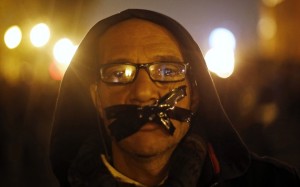
Sunday, January 25, 2015 Yasmin El-Rifae Yesterday they shot and killed a woman on Talaat Harb Street. She was walking, along with other members of the Socialist Alliance Party, through downtown to commemorate those killed since all of this started four years ago. Many of them were carrying flowers, wreaths to lay in Tahrir. Photos of Shaimaa Sabbagh in various contexts before her death have been widely shared online.
An anti-Mubarak protester in Tahrir Square, in November 2014 (Amr Abdallah Dalsh/Reuters) THANASSIS CAMBANIS, JAN 16 2015 CAIRO—Four years after the revolution he helped lead, Basem Kamel has noticeably scaled back his ambitions. The regime he and his friends thought they overthrew after storming Tahrir Square has returned. In the face of relentless pressure and violence from the authorities, most of the revolutionary movements have been sidelined or snuffed out. Egypt’s new strongman, President Abdel Fattah el-Sisi, has injected new zeal and energy into the military establishment.
In this Thursday, Dec. 4, 2014 photo, Egyptian lawyer Ragia Omran speaks on her mobile phone after a trial session of activists facing charges on organizing unauthorized protests, at a courtroom in Cairo, Egypt. Each time a group of activists is arrested in Egypt, the call for help goes most often to Omran. She then starts a long trek through police stations and prosecutors' offices, trying to get their release or at least some respect for their rights.
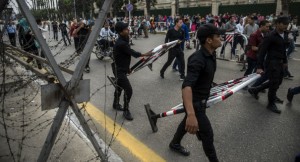
OCTOBER 28, 2014 Sharif Abdel Kouddous عربي In a bid to stamp out any last vestiges of revolutionary fervor and hold at bay the threat of collective empowerment, the Sisi regime has taken concrete steps to quash dissent, silence opposition voices, and consolidate control over the body politic. Under the guise of a war on terror and restoring “stability,” President Abdel Fattah al-Sisi has enshrined unprecedented authoritarian measures into law.
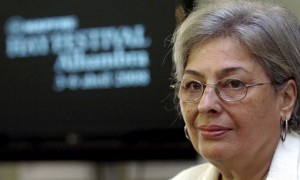
Courageous Egyptian writer, academic and translator known for her Granada trilogy Marina Warner
Monday 8 December 2014
Radwa Ashour was a powerful voice among Egyptian writers of the postwar generation and a writer of exceptional integrity and courage. Her work consistently engages with her country’s history and reflects passionately upon it. “I am an Arab woman and a citizen of the third world,” she declared, in an essay for the anthology The View from Within (1994), “and my heritage in both cases is stifled .
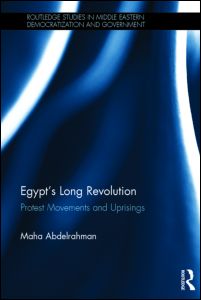
By Maha Abdelrahman Routledge – 2015 – 170 pages
Series: Routledge Studies in Middle Eastern Democratization and Government
The millions of Egyptians who returned to the heart of Cairo and Egypt’s other major cities for 18 days until the eventual toppling of the Mubarak regime were orderly without an organisation, inspired without a leader, and single-minded without one guiding political ideology. This book examines the decade long of protest movements which created the context for the January 2011 mass uprising.
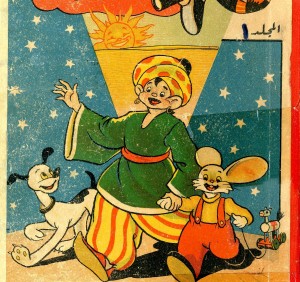
Soraya Morayef / 18 Nov 2014 Comic magazines Samir, Lulu and Mickey Geeb (Pocket-sized Mickey) and Arabic translations of Tintin, Superman and Asterix and Obelix have been read and loved by generations of Arabs. Editorial cartoons are fundamental parts of every daily newspaper. But comic art remains an often unexamined and under-supported part of Arab artistic effort.
A new initiative is intent on changing that.
In September, the American University in Beirut (AUB) began a new academic program focused entirely on the study, archiving and promotion of Arab comic art.