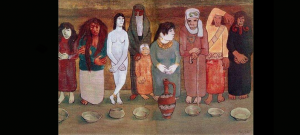
Abdul Hadi El Gazzar’s - The Theatre of Life and Hunger (1952) (Courtesy of The AMCA Project's Pinterest Account) By: Sultan Al Qassemi 31 October 2014
Egyptian artists were deeply involved in spearheading, capturing, and influencing the January 2011 uprising. In fact, the artistic community lost one of its own when 32-year-old Ahmed Bassiouny died in the early days of the uprising while taking part in the protests. For four days, the contemporary digital artist and experimental musician documented the protests in videos, which were then posted online each evening.
Sally Toma Monday, October 13, 2014 A nurse and her staff have tamed the men in a mental health ward into becoming compliant patients. They spend their days and nights in a medicine-induced state of fogginess that prevents them from rebelling against the petty rules and regulations that govern the ward. A smug guy believing he is free arrived as a patient and is not willing to comply — especially when he recognizes that the nurse's goal was to rule the ward.
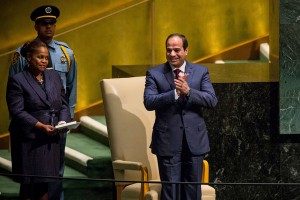
President Abdel Fattah el-Sisi of Egypt preparing to deliver a speech to the United Nations General Assembly last month. Credit Andrew Burton/Getty Images By THE NEW YORK TIMES OCT. 15, 2014 There is no such thing as bad press for President Abdel Fattah el-Sisi, at least not if it is translated by Al Ahram, Egypt’s flagship state newspaper.
A recent report in The New York Times described the muted reaction to Mr.
President Abdel Fattah el-Sisi of Egypt preparing to deliver a speech to the United Nations General Assembly last month. Credit Andrew Burton/Getty Images By THE NEW YORK TIMES OCT. 15, 2014 There is no such thing as bad press for President Abdel Fattah el-Sisi, at least not if it is translated by Al Ahram, Egypt’s flagship state newspaper.
A recent report in The New York Times described the muted reaction to Mr.
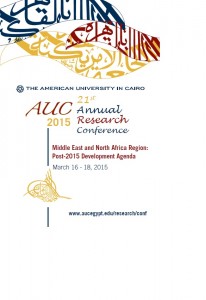
Call for Papers: The 21stAnnual Research Conference March 16-18th, 2015 The American University in Cairo, New Cairo, Egypt Conference Website: http://conf.aucegypt.edu/AUC2015 Conference Email: auc.conf2015@aucegypt.edu Introduction The American University in Cairo (AUC) is hosting its annual conference on the MENA (Middle East and North Africa) region post-2015 development agenda. AUC is the region's premier English-language university connecting the region and the world and one of its priorities is to apply research reflecting innovation and impact to the analysis of policy oriented themes and to contribute to the regional and international community in diverse topics.
Marcia Lynx Qualey Last updated: 28 September 2014 Why are gentleman-thieves and murder mysteries making a comeback in Arabic popular fiction? When Egyptian novelist and photographer Ahmed Mourad was asked earlier this year, why so few Egyptians were writing crime novels, he said that the genre was new, "and anything new is usually accompanied by a lot of attack and criticism". Then Mourad paused and corrected himself by saying, in fact, the genre was not new at all.
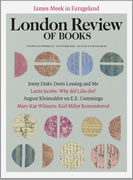
Omar Robert Hamilton London Review of Books Vol. 36 No 19 · 9 October 2014 page 30 | 1717 words After the shock and awe tactics of the Rabaa massacre last summer, when Egypt’s military regime murdered around a thousand supporters of the deposed president, Mohamed Morsi, the rolling counter-revolution has played out mostly within the justice system, between police stations, prisons and courtrooms. The system is self-contained and unaccountable: graduates of the Police Academy are automatically granted a law degree and can move fluidly from police station to prosecutor’s office to judge’s bench.
The neo-noir revolution in the Arab world might be seen as nostalgic, but it allows writers to act as ombudsmen in the current political climate Jonathan Guyer Friday 3 October 2014 From Baghdad to Cairo, a neo-noir revolution has been creeping across the Middle East. The revival of crime fiction since the upheavals started in 2011 should not come as a surprise. Noir offers an alternative form of justice: the novelist is the ombudsman; the bad guys are taken to court.
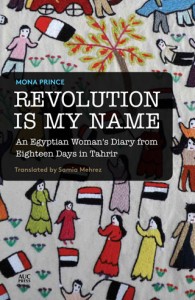
Mona Prince Translated by Samia Mehrez English edition Sep 2014 200 pp. Paperback$16.95 /LE90 ISBN 978 977 416 669 3 “For thinking about how the collective memory of revolution is being created right now, even as the revolution regains its steam, there is no better place to start than with Mona Prince’s remarkable memoir of the 25 January Uprising. . . . Revolution is My Name tells the story of revolution as it unfolds over eighteen days.
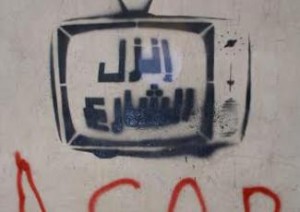
Graffiti in Cairo depicting a television with the text "Go down to the streets" Sep 05 2014 The 2011 revolutionary uprisings in the Middle East and North Africa abruptly captured global attention as the world was drawn breathlessly into the tumult with a profusion of media content, from Tweets to amateur video footage. Amidst the media blitz, analyses yielded two conflated and reactionary narratives of events. One contended that the popular protests of the so-called “Arab Spring” were wholly unexpected, a shocking diversion from the familiar politics of the Middle East in a seeming contravention of the reigning global political apathy at the turn of the millennium.