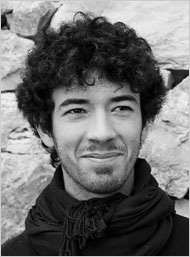
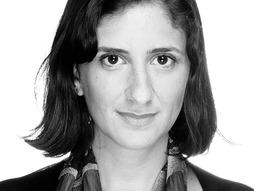
Philip Rizk, a blogger and peace activist, was released days after being detained by Egyptian security forces after his participation in a march to raise awareness about conditions in Gaza. Christina Rizk By MICHAEL SLACKMAN FEB. 11, 2009, The New York Times CAIRO — For more than four straight days, Philip Rizk said, he was blindfolded, handcuffed and interrogated around the clock by Egyptian state security agents who abducted him on Friday after he took part in a march in support of Gaza.
Why Riot?, video by Mosireen Video Collect, 2013.
“The revolution is not a thing of the past, the revolution is still in process.” Philip Rizk stated as we began our discussion of his text “2011 is not 1968”, whereby he challenges the dominant narratives of the January 25th Revolution as a youth lead revolution. He argues that the radicalizing factor of the uprising was an underclass without leaders.
09/06/2015, 2 PM, County Main SR5 The Arab and Muslim Worlds Research Forum invites you to: Language Gender and the Egyptian Revolution: An interactive workshop Presenter: Shaimaa El Naggar (LAEL) Discussant: Dr Shuruq Naguib (PPR) Produced in 2012, “Words of women from the Egyptian revolution” is a YouTube series about women’s engagement in the Egyptian uprisings, directed by Leil Zahra Mortada. Each YouTube video interviews women who reflect upon their participation in the Egyptian uprisings that started in 2011.
Egypt Today 21 September 2013 A new project to shed light on women’s role during January 25 By Nadine El Sayed After January 25, people thought feminism will finally get its break in Egypt, only to be faced with an unrepresentative female minority in the parliament, a crackdown on women’s march last year and an overall undermining of women’s role in the political scene.But Words of Women from the Egyptian Revolution documentary series hopes to contribute in writing history through telling and highlighting women’s stories duringJanuary 25, as told by them.
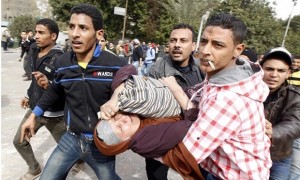
Protesters near Tahrir Square in Cairo help a woman overcome by teargas. Photograph: Mohamed Abd El Ghany/Reuters Campaigners in Egypt say at least 25 women have been assaulted as state of emergency is declared in three provinces Patrick Kingsley in Cairo
Monday 28 January 2013
Amid Egypt's ongoing civil unrest, at least 25 women have been sexually assaulted during clashes in Tahrir Square, according to local women's rights campaigners. In a typical attack, crowds of men quickly surround isolated women, groping them and attempting to remove their clothes.
Posted by Leil-Zahra on 11/12/13 • Categorized as English
I was a bit disappointed when I read Žižek´s article on Syria. It is true that the people in Syria have no excuse for not making a revolution, but compassion is a virtue. Maybe if “comrade” Žižek could´ve taken the time to scribble them a manual of “Revolution 101″ they could´ve been brought to their senses. Possibly a syllabus of recommended readings?
Open Democracy NELLY BASSILY 23 July 2015 Yara Sallam is starting the second year of her sentence in Qanater Women's prison outside Cairo. She says, "I do not feel any regret or self-defeat, the prison is not inside me." Yara Sallam is starting her second year of detention in an Egyptian prison. No mother ever wants to see her child in prison, but Rawia Sadek is not letting her daughter's incarceration bring her down.
Filmed June 2012 Subtitles available in 36 languages Art historian Bahia Shehab has long been fascinated with the Arabic script for ‘no.’ When revolution swept through Egypt in 2011, she began spraying the image in the streets saying no to dictators, no to military rule and no to violence.
Interactive transcriptInteractive transcript
TED Fellow Bahia Shehab sends an important message through her street art in Cairo: “You can crush the flowers, but you can’t delay spring.
Added: 25 May 2012 2012-05-18-egypt-nasser-32.mp4 Tahia Abdel Nasser of the American University in Cairo analyses Egyptian poetry from the 2011 revolution and its role as archive and political site. Series: The Egyptian Revolution, One Year On http://podcasts.ox.ac.uk/panel-3-language-revolution-poetry-archive-egypts-revolution-and-archival-poetics