BY MLYNXQUALEY on OCTOBER 1, 2013
Arab Literature in English
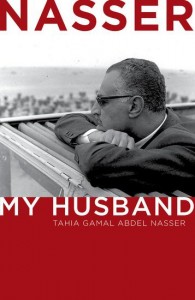
Last week, Mohga Hassib attended one of AUC’s Center for Translation Studies lectures. Dr. Tahia Abdel Nasser talked about “Translations of Nasser: Between the Pulic and the Private“:
By Mohga Hassib
Forty years ago — on September 24, 1973 — Tahia Abdel Nasser, the late president’s wife, decided to change the various discourses circulating after the era of Gamal Abdel Nasser by writing her memoir.
Published on Oct 10, 2013 Tahia Khaled Abdel Nasser, assistant professor of English and comparative literature at the American University in Cairo and granddaughter of Tahia and Gamal Abdel Nasser, is the editor of "Nasser: My Husband" by Tahia Gamal Abdel Nasser, translated by Shereen Mosaad, with a foreword by Hoda Gamal Abdel Nasser. In this interview she shares her views about the iconic Egyptian 'rais,' his legacy, and personal life.
Published on Mar 22, 2013 Egypt's January 25 revolution helped bring out the best in raw and potent urban arts, most of all in the graffiti scene in Cairo. This short video gives a brief glimpse into the always evolving street art scene that has gone from strength to strength and become a valuable component in the creative resistance to Egyptian authorities and establishment. Produced by: Soraya Morayef Directed and Edited by: Marwan Imam Music by: Ahmed Safi Footage courtesy of: Islam Momtaz Soraya Morayef Amir Nazeer Farah Saafan Ian Lee Rodina Mikhail Carmel Alyaa Delshad Featuring the works of: The Sad Panda Kareem Gouda Ganzeer Charles Akl Amr Gamal Ammar Abo Bakr Mohamed El Moshir Laila Magued Alaa Awad Zeft Amr Nazeer Hozny Iyad Oraby Aref and Hoda Ismail Ahmed El Masry Saiko Manio Ahmed Abdallah KIM Shaza Khaled Alia El Tayeb El Teneen Hossam Shukrallah Ziad Tarek Mariam Abou Ghazi Youssef Bagato Saif Roshdy Mostafa el Tourkhy And many others who remain anonymous
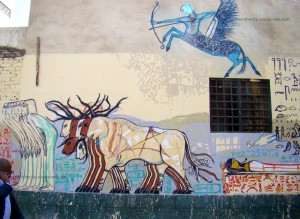
Mural by Alaa Awad Africaseen blog, 2nd April 2013 by Susan Phillips While Soraya Morayef identifies herself as a writer and journalist, I see her through a different lens, as an artist and archivist. Through her photo blog documenting the extraordinary explosion of street art in Egypt following the initial Tahrir Square protests of January 2011, Morayef has captured, framed, and contextualized a fleeting moment in Egypt's long, proud history of artistic and cultural expression.
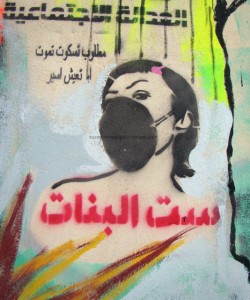
Sit El Banat, stencil tribute to the women who were beaten, dragged and stamped on by military forces in December 2011. Copyright Suzee in the City. 28 March 2013, africaisacountry.com Mickey Mouse is pulling apart a bomb: inside is the torso of George W. Bush, and they’re both looking perfectly happy about the whole thing. Soraya Morayef is taking a photo of the wall where these figures are painted, on a busy street in downtown Cairo, when a man walks up to her and asks her what the picture means.
By Soraya Morayef Open Democracy, 25 March 2014 The author reviews the only documentary released to-date of the people's uprising in Egypt until the fall of Mohamed Morsi on 3 July 2013. There is no such thing as a comprehensive narrative of the Egyptian revolution. Anyone attempting such a thing will most likely fail, as the complex evolution of a people’s uprising to where Egypt is today cannot be summarised in one story, let alone a 108-minute film.
By Soraya Morayef Open Democracy, 13 November 2013 Many disregard the recurrent stories of prison deaths, police torture and rape because - on the other hand – Egypt's streets are empty after curfew and the walls are freshly painted; surely a clear indication that the state has succeeded in restoring security and defeating terrorism. On Tuesday November 5, Egypt’s Minister of Local Development, Adel Labib, announced a new law criminalizing graffiti with a maximum jail sentence of four years and a fine of 100,000LE.
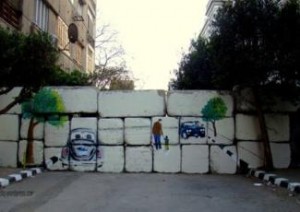
[A mural on Sheikh Rihan Street's wall. Image from the author.]By Soraya Morayef Jadaliyya, 22 May 2012 Around the corner from Tahrir Square, the heart of Egypt’s eighteen-day uprising, Mohamed Mahmud Street bears the scars of a turbulent political year in Egypt. The once-bustling street off of Tahrir Square has seen its share of violent battlefields--beginning with 28 January 2011 and ending with the February 2012 clashes following the Port Said massacre.
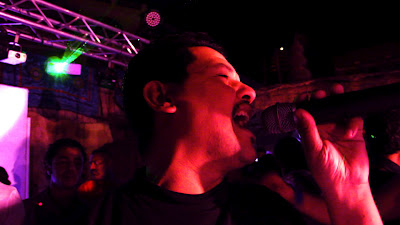
[/caption]By Soraya Morayef Jadaliyya, 29 May 2012 In the heated den of the Greek Club on Emad el-Din Street in downtown Cairo, sweating bodies heave and move to the infectious reggaeton fused with a tabla beat, as Amr Haha, DJ Figo, and Sadat swing their mics back and forth, bantering, ad-libbing, and cheering. One takes a swig out of his Stella, another dips the mic into the sea of eager hands as the jolly crowd sings along to the simple, lewd lyrics of “Aha el shibshib daa’!
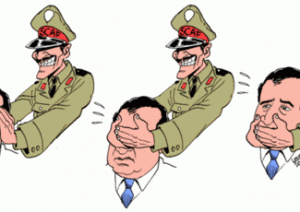
[Essam Sharaf and Army Generals. Cartoon by Carlos Lattuf. Image from Wikimedia Commons.]By Soraya Morayef 15 July 2012 Over the past sixteen months, much has been written about Egypt’s leaderless revolution, with many blaming its seeming sluggishness on the absence of a single figure to unite and represent the now fragmented revolutionary forces. To me, and perhaps others, Essam Sharaf was—however briefly—a potential candidate for this task. On 4 March 2011, right after his appointment as Egypt’s first post-revolution prime minister, Sharaf took the oath in Tahrir Square and spoke to thousands of protesters gathered in the area.