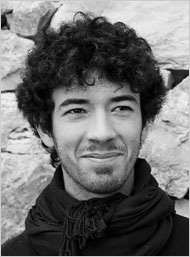
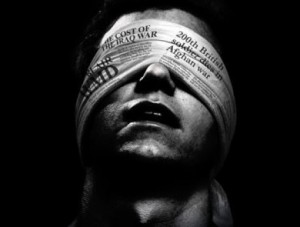
Philip Rizk, a blogger and peace activist, was released days after being detained by Egyptian security forces after his participation in a march to raise awareness about conditions in Gaza. Christina Rizk By MICHAEL SLACKMAN FEB. 11, 2009, The New York Times CAIRO — For more than four straight days, Philip Rizk said, he was blindfolded, handcuffed and interrogated around the clock by Egyptian state security agents who abducted him on Friday after he took part in a march in support of Gaza.
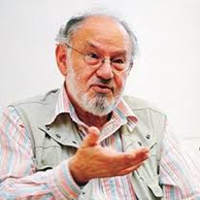
April 10, 2015 Carole McGranahan [Savage Minds is honored to publish this essay by Talal Asad. He teaches anthropology at the CUNY Graduate Center and specializes on religion and politics in the Middle East and Europe.] I have never visited Israel, or the occupied West Bank and Gaza, but I have several friends, Jews and Palestinians, who teach in universities there and joining the BDS movement does not entail breaking my friendship with them.
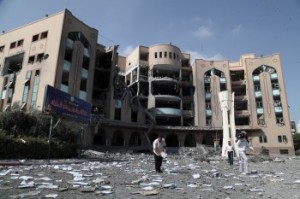
A man inspects the damage at the Islamic University of Gaza (AP Images) Rasha Faek, Yousef Al-Helou and Thaer Thabet / 03 Aug 2014 GAZA—At least three universities, seven United Nations schools and an estimated 141 locally-run schools have suffered severe damage in the month-long war between Israel and Hamas.
Israeli missiles hit the Islamic University of Gaza early on Saturday, destroying a major building on the campus but apparently not killing anyone.
Posted by Leil-Zahra on 12/29/14 • Categorized as English
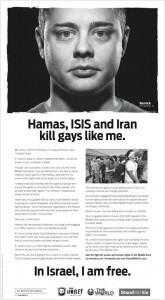
* In response to a full-page ad running this week in The New York Times funded by Rabbi Shmuley, Stand with Us, and This World (Shmuley’s own); featuring political campaigner Rennick Remely. My name is Leil-Zahra Mortada. I’m an Arab Queer person. And I support justice. If I lived in Gaza or “Israel’s neighboring states”, I would be thrown in jail, mutilated or killed.
by Jadaliyya Reports Aug 06 2014 [The following letter calling on scholars and librarians within Middle East studies to boycott Israeli academic institutions was submitted in the name of the below signatories to Jadaliyya on 6 August 2014.]
We, the undersigned scholars and librarians working on the Middle East, hold that silence about the latest humanitarian catastrophe caused by Israel’s new military assault on the Gaza Strip—the third and most devastating in six years—constitutes complicity.
by John Pilger 11 September 2014
Editor's note: The following article is adapted from John Pilger's Edward Said Memorial Lecture, delivered in Adelaide, Australia, on 11 September 2014.
"There is a taboo," said the visionary Edward Said, "on telling the truth about Palestine and the great destructive force behind Israel. Only when this truth is out can any of us be free."
For many people, the truth is out now.
Omar Robert Hamilton 12 September 2014 On 26 August a ceasefire between Israel and Hamas was agreed, bringing a fragile end to a war that killed 2150 Palestinians (mostly civilians) and 73 Israelis (mostly soldiers). Since then Hamas has not fired a single rocket, attacked an Israeli target, or done anything to break the terms of the ceasefire. Israel has done the following: 1. Annexed another 1500 acres of West Bank land 2.
M. Lynx Qualey Fourteen hundred years ago and more, the poet-prince Imru’ al-Qais was banished by his father. The king exiled his son, or so the legend goes, in part because of the prince’s poetry. Thus it was that, when the king was killed by a group of his subjects, al-Qais was traveling with friends. Al-Qais returned to avenge his father’s death, but afterward spent the rest of his life in exile, fleeing from place to place, writing poetry and seeking support to regain his father’s throne.
Al-Shabaka Policy Brief 4 September 2014 Overview The targeting of Palestinian water infrastructure is a systemic and two-pronged Israeli policy to prevent the existence of sustainable Palestinian communities. In this policy brief, Al-Shabaka Policy Member and environmental researcher Muna Dajani builds on the evidence of Israel’s targeting of water infrastructure and shows how the policy is not only preventing economic growth but is also driving Palestinians off their land. She looks at the resulting commodification of water and cautions that the process is changing traditional patterns of community water management and could forever change the shape of Palestinian society.
4 August 2014 Peter Cohen Sociologist; Jewish World War II Survivor Editor's note: The author is a retired sociologist from the University of Amsterdam and a Jewish-Dutch World War II survivor. He does not consider the latter relevant to his view on this topic, but we found it pertinent to include. "Anti-Zionism, in fact, is the form that much of today's anti-Semitism takes." ~ Alvin Rosenfeld1 The view that Jews are a nation is the primary belief underlying Zionism.