Cornelia Zwischenberger / Martina Behr (eds.) ISBN:978-3-7329-0191-3 39,80 EUR Contents The issue of quality in interpreting has been debated for almost three decades now. This volume is evidence of the sociological turn Interpreting Studies is taking on quality research. Based on either a socio-cognitive perspective, a sociological approach, or the situational social variability of the entire source and target context, this volume’s contributions analyse the respective roles of participants in a communicative event and the objective of an equivalent effect.
Future-proofing interpreting and translating 29 June – 1 July 2016 Heriot-Watt University, Edinburgh, Scotland
Call For Papers The Organising Committee has now opened the Call for Papers for the Critical Link 8 conference. This Call includes submissions for papers, posters, panels, round tables, and workshops. Innovative ideas for sessions in other formats will be welcomed. Proposals may also be submitted for pre-conference workshops and demonstrations.
The conference will bring together all community/public service interpreting and translation stakeholders: community and public sector representatives, employers, developers of tools and technologies, policy makers, practitioners, professional bodies, researchers, service users, trainers and educators, TICS (translation, interpreting & communication support) service providers, and other interested parties to build on progress made to date in order to move forward.
University of Leeds - Faculty of Arts Location: Leeds Salary: £38,511 to £54,841 Hours: Full Time Contract Type: Permanent Placed on: 5th January 2015 Closes: 20th January 2015 Job Ref: ARTLC1010 Available from 1 June 2015 Principal responsibilities will include convening and delivering teaching on a number of postgraduate modules which provide professional preparation for trainee interpreters.
Guest editors: Lucía Ruiz Rosendo (University Pablo de Olavide) & Clementina Persaud (University Pablo de Olavide) The figure of the interpreter as an intercultural and linguistic mediator in zones devastated by conflict has always existed due to the fact that conflicts have been intrinsic to the development of history. The distinctive trait of these interpreters is that, unlike other interpreters who are seldom in danger when exercising their profession, they risk being subjected to psychological and emotional pressure or physical harm and are often unable to find politically or linguistically neutral spaces, and the combatants do not recognise them either (Kahane 2008).
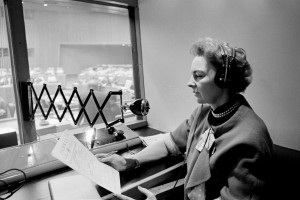
Highly skilled interpreters perform a vital service at UN meetings, where delegates come together to present their views in one of the six official languages or in their own tongue. A UN Interpreter, at work in a booth over looking a meeting room. (1965) UN Photo Feature: UN News Centre 22 September 2014 Out of potential linguistic chaos, a corps of over 100 United Nations interpreters brings order and comprehension as speaker after speaker from around the world takes the podium of the General Assembly to give their annual speeches at the General Debate, discusses war and peace in the Security Council, or delves into arcane details of administrative and budgetary affairs in one of the Assembly’s six specialized committees.
Barbara Moser-Mercer, Leïla Kherbiche and Barbara Class* Journal of Human Rights Practice(2014) 6(1): 140-158. doi: 10.1093/jhuman/hut025 First published online: January 6, 2014 Abstract When communication breaks down, conflict ensues. Resolving conflicts successfully relies heavily on re-establishing communication. Almost all conflicts involve parties who do not speak the same language or share the same culture. Language is the main vehicle of communication under such difficult circumstances, and yet there are few professional interpreters in the field to mediate between languages and cultures.
First Forlì International Workshop Department of Interpreting and Translation, University of Bologna Forlì, Italy, 7-8 May 2015 More than 15 years have passed since the late Miriam Shlesinger called upon the Interpreting Studies community to embrace corpus-based methodologies (Shlesinger 1998). Corpus-based methodologies enable researchers to collect empirical data in quantities large enough to make reliable generalizations about interpreter performance (as opposed to studies based on anecdotal evidence); moreover, they also make it possible to analyse relevant phenomena on greater data sets than is usually the case when "
Translators/Interpreters (T/Is) contracted to work in conflict zones are often non-professional linguists yet play a key role in communications. Operating in high-risk environments, they are extremely vulnerable and require special protection both during and after the conflict. Users of T/I services must be aware of their responsibilities to T/Is and of the need to continuously protect them. At the same time, T/Is themselves must know their rights as well as uphold the standards and ethics of the language profession to enhance their safety and standing.
Translation & Interpreting: International Journal of Translation & Interpreting Research Today multilingualism and multiculturalism have become common features of countries and societies worldwide. This striking development has major consequences for the way institutions function and guarantee human rights. It also impacts on how and whether citizens and populations can exercise their human rights and avail themselves of social and public services. The way in which different societies and their policy-makers have been coping with the diversity of their populations differs, but there is growing awareness across the globe of the need to address these issues.