New Left Review 13, January-February 2002 DAVID GRAEBER Is the ‘anti-globalization movement’ anything of the kind? Active resistance is true globalization, David Graeber maintains, and its repertoire of forms is currently coming from the arsenal of a reinvented anarchism. It’s hard to think of another time when there has been such a gulf between intellectuals and activists; between theorists of revolution and its practitioners. Writers who for years have been publishing essays that sound like position papers for vast social movements that do not in fact exist seem seized with confusion or worse, dismissive contempt, now that real ones are everywhere emerging.
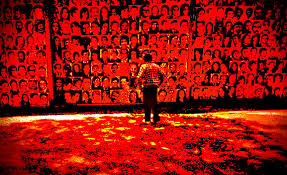
From beyond the grave, they shape our lives more than they did when they when they were alive. By Costica Bradatan
June 18
The Washington Post
Costica Bradatan is an Associate Professor of Humanities in the Honors College at Texas Tech University. His latest book is "Dying for Ideas: The Dangerous Lives of the Philosophers." Moscow, Oct. 7, 2006. Anna Politkovskaya, a prominent Russian journalist, human rights activist and vocal critic of President Vladimir Putin, was found dead in the elevator of the block of flats where she lived.
Special Issue for Journal of Cultural Research Volume 19, Issue 2, 2015
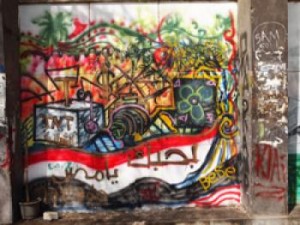
Foreword Anastasia Valassopoulos pages 115-116 Acknowledgements page 117 Introduction: Egyptian women, revolution, and protest culture Dalia Said Mostafa pages 118-129 Action, imagination, institution, natality, revolution Ziad Elmarsafy pages 130-138 Egypt’s revolution, our revolution: revolutionary women and the transnational avant-garde Caroline Rooney pages 139-149 Inserting women’s rights in the Egyptian constitution: personal reflections Hala Kamal pages 150-161 Egyptian women, revolution and the making of a visual public sphere Fakhri Haghani pages 162-175 A multimodal analysis of selected Cairokee songs of the Egyptian revolution and their representation of women Nadia A.
Cristina Cielo
(Sawyer Seminar Series, University of the Witwatersrand, Johannesburg)
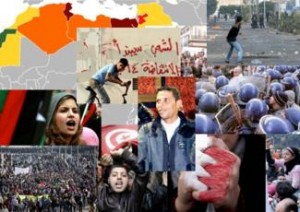
Popular uprisings in the Middle East over the last months have transformed the political landscapes and possibilities of the region's diverse nations. The hope engendered by the successful mobilizations against the Tunisian and Egyptian governments has darkened as reports emerge of the repression and violence that meet continuing protests in other parts of the region. Uruguayan intellectual and journalist Raúl Zibechi gives us a South American perspective of the momentous changes taking place in North Africa.
[Collage by Jadaliyya. Images from unknown source] by Asef Bayat
Mar 03 2011
Serious concerns are expressed currently in Tunisia and Egypt about the sabotage of the defeated elites. Many in the revolutionary and pro-democracy circles speak of a creeping counter-revolution. This is not surprising. If revolutions are about intense struggle for a profound change, then any revolution should expect a counterrevolution of subtle or blatant forms. The French, Russian, Chinese, Iranian, and Nicaraguan revolutions all faced protracted civil or international wars.
Cihan Tuğal
Berkeley Journal of Sociology
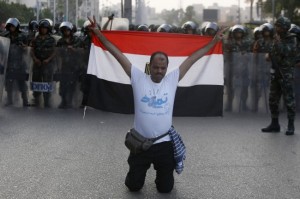
7 October 2014 When revolutionaries do not produce ideology, demands, and leaders, does this mean that the revolt will have no ideology, demands, and leaders? Cihan Tuğal discusses the limits and traps of Egypt’s “leaderless revolution” in light of the nation’s current military rule. In June 2013, millions of Egyptians mobilized against a clumsy autocrat, the elected dictator Morsi. The rallying cry was “a second revolution,” referring back to the toppling of Mubarak as the first one.
"Peoples Library Occupy Wall Street 2011 Shankbone" by David Shankbone - Own work. Licensed under CC BY 3.0 via Wikimedia Commons. Jonathan M. Smucker
October 7, 2014,
Berkeley Journal of Sociology
Occupy Wall Street participant Jonathan Smucker takes a critical look at the movement’s “prefigurative politics” through the theoretical lenses of Gramsci and Habermas. What is politics? In this essay, I examine so-called “prefigurative politics” as it played out in Occupy Wall Street (OWS)—through Gramscian and Habermasian theoretical lenses.
Counterpunch, WEEKEND EDITION MARCH 13-15, 2015 by HAMZA HAMOUCHENE Frantz Fanon died a few months before Algeria’s independence in July 1962. He did not live to see his adoptive country becoming free from French colonial domination, something he believed had become inevitable. This radical intellectual and revolutionary devoted himself, body and soul to the Algerian National liberation and was a prism, through which many revolutionaries abroad understood Algeria and one of the reasons the country became synonymous with Third World revolution.
By Ahmed Refaat Mada Masr, 15 March 2015 I first heard Mona Baker two months ago in a workshop organized by the Imaginary School Program at Beirut, the art space not the city. It was called: “Prefigurative politics and creative subtitling.”
During the three-hour event, Baker briefly summed up what she discusses more elaborately in her research project, “Translating the Egyptian Revolution,” which “examines the language-based practices that allow Egyptian protesters to contest dominant narratives of the revolution and, importantly, to connect with, influence and learn from global movements of protest.
Voices Across Borders
The Blog of the Race and Resistance Research Network at TORCH
Posted by: Josh Aiken and Nicole Nfonoyim-Hara
Date: 26 February 2015
Ferguson: Transnational Activism and The Academy
The following is a transcript of presentations at the Race and Resistance seminar on 30th January 2015, at which Master’s students Josh Aiken and Nicole Nfonoyim-Hara reflected on the relationship between their studies at Oxford, transnational solidarity movements, and their activism protesting the killing of Michael Brown.