Nineteen thought-provoking essays on the art of translation and its ability to help us understand other cultures and ways of thought by award-winning translators and publishers. Includes recommendations by the essayists of translations that they enjoyed reading. 88 pp. 2014
Download: The Art of Empathy Translation.pdf
Table of Contents Preface by NEA Chairman Jane Chu ............................................... i Introduction by NEA Literature Director Amy Stolls .
Translators/Interpreters (T/Is) contracted to work in conflict zones are often non-professional linguists yet play a key role in communications. Operating in high-risk environments, they are extremely vulnerable and require special protection both during and after the conflict. Users of T/I services must be aware of their responsibilities to T/Is and of the need to continuously protect them. At the same time, T/Is themselves must know their rights as well as uphold the standards and ethics of the language profession to enhance their safety and standing.
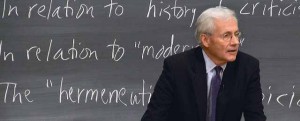
About the Course This is a survey of the main trends in twentieth-century literary theory. Lectures will provide background for the readings and explicate them where appropriate, while attempting to develop a coherent overall context that incorporates philosophical and social perspectives on the recurrent questions: what is literature, how is it produced, how can it be understood, and what is its purpose?
Course Structure This Yale College course, taught on campus twice per week for 50 minutes, was recorded for Open Yale Courses in Spring, 2009.
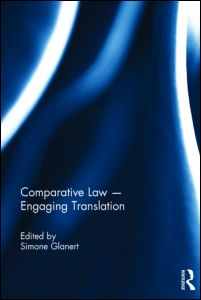
Edited by Simone Glanert Routledge – 2014 – 224 pages Hardback: £80.00 978-0-415-64270-5 26th June 2014 In an era marked by processes of economic, political and legal integration that are arguably unprecedented in their range and impact, the translation of law has assumed a significance which it would be hard to overstate. The following situations are typical. A French law school is teaching French law in the English language to foreign exchange students.
by Alexander Burak Appears in issue 61 of The Russian Language Journal, on page 5. rlj.americancouncils.org/issues/61/articles/burak-2011 Download full article: Burak_2011.
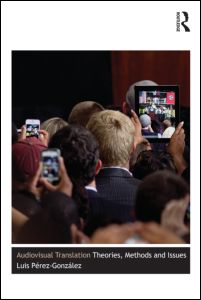
By Luis Pérez-González Routledge – 2014 – 356 page Paperback: £25. 99 978-0-415-53027-9 August 12th 2014 Hardback: £90.00 978-0-415-53025-5 August 13th 2014 Audiovisual translation is the fastest growing strand within translation studies. This book addresses the need for more robust theoretical frameworks to investigate emerging text- types, address new methodological challenges (including the compilation, analysis and reproduction of audiovisual data), and understand new discourse communities bound together by the production and consumption of audiovisual texts.
A cura di: Miller, Donna Rose ; Monti, Enrico (2014) Bologna: Centro di Studi Linguistico-Culturali (CeSLiC), DOI 10.6092/unibo/amsacta/4030. In: Quaderni del CeSLiC. Atti di Convegni (3). Documento PDF Available under License Creative Commons Attribution Non-commercial (CC BY-NC 3.0). 3899Kb URL ufficiale: http://www3.lingue.unibo.it/ceslic/ Abstract Tradurre Figure / Translating Figurative Language offers 30 original contributions on the interlingual translation of figurative language. The chapters were first presented at an international conference held at the University of Bologna in December 2012 and have been selected through a double peer-reviewed process.
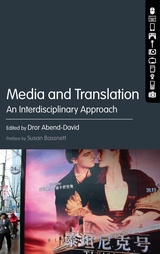
Edited by Dror Abend-David Over the last decade there has been a dramatic increase in publications on media and translation. In fact, there are those who believe that so much has been published in this field that any further publications are superfluous. But if one views media and translation as anything ranging from film and television drama to news-casting, commercials, video games, web-pages and electronic street signs, it would seem that research in media and translation has barely scratched the surface.
Sara Hakeem Grewal From: African American Review Volume 46, Number 1, Spring 2013 pp. 37-54 | 10.1353/afa.2013.0023 Abstract: This article examines three main aspects of translation in the hip hop of Blackamerican Muslim hip-hop artists Mos Def and Lupe Fiasco: first, translation between Hip Hop Nation Language (HHNL) and a high register of White Mainstream English (WME) termed “academic English”; second, translation between HHNL and WME more broadly; and third, translation between HHNL and Arabic.