Middle Eastern Literatures Volume 13, Issue 2, 2010, pages 191-210 Special Issue: Arabic Literature in Egypt at the Beginning of the 20th Century in Search of New Aesthetics: Al-Muwaylihi and Contemporaries DOI: 10.1080/1475262X.2010.487317Samah Selim Along with Ponson du Terrail's Rocambole and Arthur Conan Doyle's Sherlock Holmes, Maurice Leblanc's Arsène Lupin is one of the most famous popular fiction figures in the 20th century Egyptian literary imaginary. The first Arabic translation of Arsène Lupin, Gentleman-Cambrioleur (1907) by essayist and translator ‘Abd al-Qādir Hamza was published in the Egyptian fiction serial The People's Entertainments (Musāmarāt al-sha‘b, 1904-1911) in 1910.
BY MLYNXQUALEY on MARCH 8, 2012 • ( 2 )
The “10 rules” series resumes with award-winning translator Dr. Samah Selim. Eleven Rules 1. Think about register. Every essay, novel or story projects a particular and unique language register. A really important part of translating fiction is capturing and rendering that register in English. It’s easy to fall into the trap of overly stiff or archaic prose on the one hand and too-easy colloquialisms on the other.
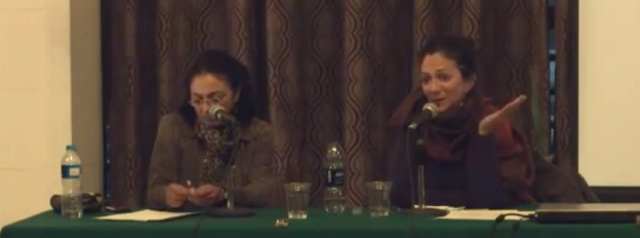
Academic lecture at AUC's Center for Translation Studies by Dr. Samah Selim, department of African, Middle Eastern and South Asian Languages and Literatures, Rutgers University on popular fiction consumption by the Egyptian public in the 1800s and 1900s. March 2015 https://www.youtube.com/watch?v=s1o_tahNYVM
Samah Selim re-maps the journey of the early Arab novel
Friday, March 6, 2015 By Laura Gribbon, Jadaliyya Do stories need authors? Are texts fixed? Is adaptation a form of translation? These are some of the questions Professor Samah Selim has been considering in her study of Egyptian periodical Musamarat al-Shaab (The People’s Entertainment), and she raised them during a talk at the American University in Cairo last week.
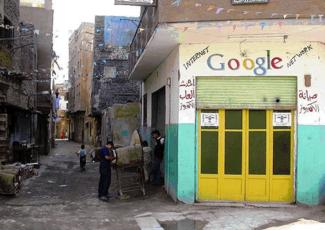
[Internet Cafe in Egypt, Image from Unknown Archive]by Samah Selim Jadaliyya, Feb 01 2011 Many analysts have been commenting on the broader significance of the astonishing and awe-inspiring events that have swept Egypt by storm over the past six days. From Tunisia to Yemen, the Arab world is in open revolt against the sclerotic, corrupt and vicious dictatorships that have held power with the tacit support of the US and EU for decades.
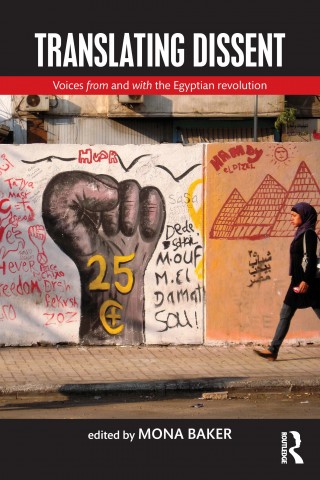
ICWA: Institute of Current World Affairs Jonathan Guyer has contributed a chapter to Translating Dissent: Voices from and with the Egyptian Revolution, a forthcoming book from Routledge. His chapter focuses on the translation of Arabic political cartoons. Here is Jonathan’s abstract: This chapter reflects critically on the translation of Arabic political cartoons, both in broad and narrow terms. The questions I address include the following: How does one translate humour and satire?
Deena Mohamed Experiencing the Egyptian revolution as a teenager meant living through a period of history that witnessed my generation both shaping and being shaped by momentous events. This dynamic also impacted a webcomic I created in June 2013, at the age of eighteen, originally in English and later in both English and Arabic. The current essay reflects on the role played by language and translation in radically transforming the content of this webcomic, whose purpose varied as its audience grew and encompassed different constituencies.
Aquila By Women's Voices Now, Wednesday, 18th February 2015 In the late 1980s, feminism in the Middle Eastern and North African (MENA) context gained prominence in international debate. Research addressed “the status of women in Muslim countries through two frames: the inhibiting effects of Islam and the potential for reform through norms building.” Many contemporary scholars concluded, “Islam, specifically the prevailing interpretations of Islamic law (Shari’a),” the prevalent cultural traditions enshrined within this religion, and the attitudes it informs and fosters reinforce gender inequality in Muslim countries.