https://soundcloud.com/cbrl_sound/arab-uprising-helen-underhill Developing Diaspora Politics in the Egyptian Revolution: Learning about Democratic Transitions from the Praxis of Egypt’s Diaspora and Migrant Activists The Arab Uprising: Researching the Revolutions, 22-23 September 2014. Conference held at the CBRL British Institute in Amman. Abstract: This paper examines diaspora and migrant participation in the Egyptian uprisings of 2011 and the continuing struggle. I reflect on their praxis and development in relation to diaspora politics, activists’ political trajectories, and the notion of a ‘democratic transition’ in the Egyptian context.
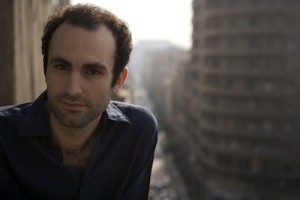
By julietomlin March 30, 2011, Frontline Club British-Egyptian actor and producer Khalid Abdalla flew from London to Egypt soon after it became clear that the protests of 25 January were gathering momentum and was there for the Friday ‘Day of anger’ on 28 January. The Kite Runner star, whose other credits include Green Zone and In the Last Days of the City, was memorably interviewed from Tahrir Square by Channel 4 News’ Jon Snow while his father Hossam Abdalla was in the studio.
February 26, 2014, Vice by Jared Malsin Egyptian actor Khalid Abdalla is one of the chief protagonists in the documentary The Square, which was nominated earlier this month for an Academy Award for Best Documentary Feature. His new film, In the Last Days of the City, is going to be even better. Last Days tells a story that roughly echoes Khalid's own life: It's the tale of a documentarian who is trying to make a film about his city, Cairo, and according to Khalid, "
Channel 4 News, 14 August 2013 Actor and director Khalid Abdalla gives his personal response to the deadly violence gripping Egypt following operations to clear pro-Morsi camps in Cairo. I'm disgusted by the blood, and resisting falling prey to a polarised narrative. I don't believe the sit-in should have been cleared, but I'm against what the sit-in stands for. I hold both the army and the Brotherhood responsible for the situation we're in - on so many levels - and unfortunately it's the narratives they are peddling, in blood, in actions and in words, that are currently defining how things are framed, internally and externally.
16 August 2013 Both the Egyptian military and the Muslim Brotherhood are "wrong" and "fundamentally fascist organisations", an Egyptian actor and activist has claimed. Khalid Abdalla, known to western audiences for his roles in The Kite Runner and United 93, told the BBC's Mishal Husain the he "rejected the binaries" being presented - the choice between the two organisations - saying the future solution had to be an inclusive one, with everyone represented.
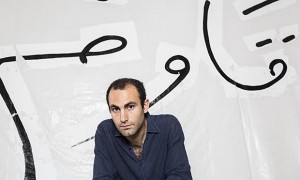
Khalid Abdalla stands in front of a painting of the Arabic word for "Resist" in Cairo. Photograph: David Degner David Degner/David Degner The British-born actor found success in United 93 and The Kite Runner, but has spent much of the last three years camped out in Tahrir Square Andrew Anthony
Sunday 3 November 2013
When actor and political activist Khalid Abdalla was a young schoolboy, a teacher set his class the task of writing their own obituaries.
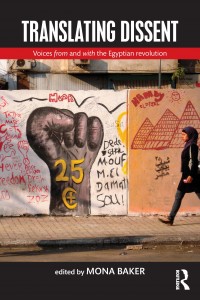
Despite having edited numerous books and journal issues over the past 20 years, I found this volume exceptionally challenging. The ups and downs, the uncertainty, and the upheaval that characterized the political landscape in which it was conceived permeated every aspect of the project: from persuading activists with more pressing concerns to invest in reflecting and writing about a relevant aspect of their experience, to constantly adapting the plan of the volume and having to identify new authors as a number of initial contributors – some either too traumatized by the events of the past two years or too busy attending to colleagues in prison, or both – were unable to find the mental space necessary to write.
This is a volume of uncommon urgency, intellectual range, and political importance. Translation, which occupies the crossing point of discourse and power and which affects all networks of word, image and sound, must now stand near the centre of any study of global activism. The richly diverse set of contributors, the activists and scholars, the creators and analysts, located in and out of Egypt, uncover both the conceptual depth and the social force in the contemporary tasks of the dissenting translator.
Wiam El-Tamami For a long time I was afraid and unwilling to write about the revolution, struggling with the impossibility of translating the immensity, intensity, and sometimes absurdity of the upheaval — within us and without — into words that make sense, that can convey something of the experience without reducing its unfathomability. What does it mean to write without betraying? Is it possible to bring such irreconcilable elements into a cohesive whole that nevertheless belies its own incoherence?