From the www.monabaker.com archive (legacy material) Mona Baker | The Translator | November 2002 Editorial Statement (The Translator, Volume 8, No. 2, 2002) Since April of this year, a number of petitions endorsing variant forms of an academic boycott against Israel have been signed by hundreds of academics across the world. On 16 April, the executive of the largest union of university teachers in Britain, NAFTHE (National Association for Teachers of Higher Education), resolved “that all UK institutions of higher and further education be urged immediately to review – with a view to severing – any academic links they may have with Israel.
Khalid Abdalla The story of the Egyptian revolution carries a heavy burden. Its many tales travel across contexts and experience, within Egypt and beyond it, influencing movements and revolutions while building dreams and threatening them. Solidarity fundamentally entails sharing an interpretation of a story. How that story is told and re-told has political and historical implications that are as much about the current moment as they are about the future. Political events are hard to follow at the best of times, and solidarity is broken when the thread of a story is lost or events within it become subject to confusingly competing narratives.
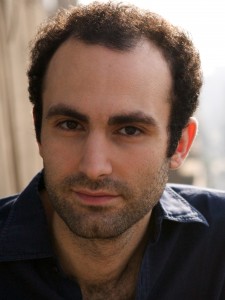
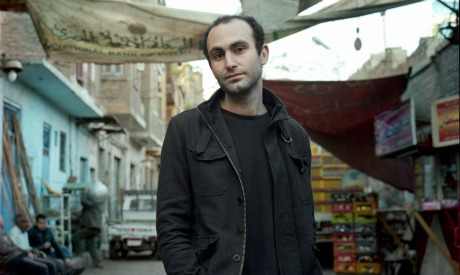
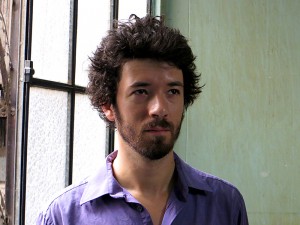
Egyptian-British actor, producer, filmmaker and political activist Khalid Abdalla (Photo: Rena Effendi) Ahram Online met with renowned Egyptian-British actor Khalid Abdalla and discussed his varied repertoire as a filmmaker, producer, co-founder of important film initiatives and also as a political activist Nourhan Tewfik , Saturday 26 Dec 2015 “It was a World War I play. We were in a classroom. All the chairs were moved to the side and there was a square made in the middle.
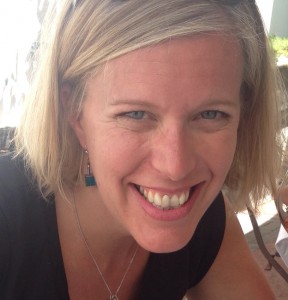
Helen Underhill As mobilization connected to the 2011 revolution continues inside Egypt and beyond its borders, the translation and narration of particular moments and actors shapes and further complicates various understandings of the struggle. This essay draws on the experiences and perspectives of British-Egyptian and Egyptian migrant activists in the UK to illustrate how and why they used translation as part of their mobilization online and at demonstrations in the UK and in Egypt.
https://soundcloud.com/vivavocepodcasts/helen-underhill Political Learning in the Struggle: A study of Egypt’s Diaspora
IDPM, University of Manchester
Keywords: Diaspora; Egypt;Political Learning
http://www.vivavocepodcasts.com/#!political-learning/c1qly
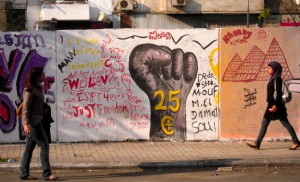
Activist use of translation to connect with global publics and protest movements Professor Mona Baker, University of Manchester This study examines one aspect of the 2011 Egyptian Revolution which has received no attention in public or academic circles so far, namely, the language-based practices that allow Egyptian protestors to contest dominant narratives of the Revolution and, importantly, to connect with, influence and learn from regional and global movements of protest, including the Tunisian uprising and the ‘Occupy’ movement.
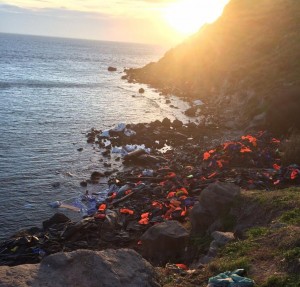
Photo courtesy of Disaster Medics. Guernica, November 24, 2015 By Omar Robert Hamilton Two weeks as a volunteer at a refugee camp in Greece. I see the young man of the night before, sitting alone and smoking, staring at the black sea before him, his phone dark in his hand. Next to him a dozen young men lie asleep under grey blankets, their enormous UNHCR labels flapping in the wind. “You OK?
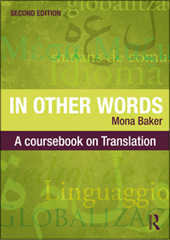
Chapter 8 of the second edition of In Other Words: A Coursebook on Translation, by Mona Baker, is available as free access material, courtesy of Routledge. Download Ethics and Morality In Other Words. To access online resources accompanying the book, go to http://cw.routledge.com/textbooks/baker/.
Philip Rizk, interviewed by Mona Baker Editor’s Introduction: I chose to interview Philip Rizk for this collection because I consider him one of the most critical and articulate voices to emerge out of the vigour and ensuing trauma of the past few years in Egypt. He is as un-institutionalized as almost anyone can be in a modern society, and perhaps it is his positioning outside most mainstream institutions, including academia, that gives him a unique vantage point, one that allows him to do more justice to the complexity and passion of the revolutionary landscape in Egypt than most.