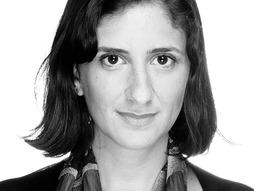
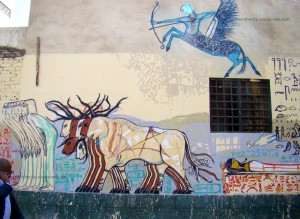
By Bahia Shehab, Citysharing The streets of Cairo have become an open gallery to many artists wishing to express their views, dreams and hopes for a better Egypt. Artists are using the walls of the city to tell their stories, to lament the death of martyrs and to call for political and social change. Thus each painted wall acquires a life of its own, it no longer belongs to a building, a bridge or a street, but it has been recruited to serve a cause and to rally a group of people to support that cause.
Filmed June 2012 Subtitles available in 36 languages Art historian Bahia Shehab has long been fascinated with the Arabic script for ‘no.’ When revolution swept through Egypt in 2011, she began spraying the image in the streets saying no to dictators, no to military rule and no to violence.
Interactive transcriptInteractive transcript
TED Fellow Bahia Shehab sends an important message through her street art in Cairo: “You can crush the flowers, but you can’t delay spring.
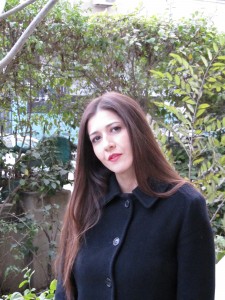
Tahia Abdel Nasser The poetry recited in 2011 in the context of the Egyptian revolution, and its later translation into a variety of languages, contributed to local and global understandings of that historical moment. This essay examines some of the ways in which new poetic production in 2013-2014 extends and reconfigures the revolutionary movement in Egypt, the difference between the new poetics and the poetry inspired by the 2011 revolution, and the effect that translating new poetry concerned with the events that have been unfolding since 2011 can have on global understandings of the unfolding narrative of the uprising.
Added: 25 May 2012 2012-05-18-egypt-nasser-32.mp4 Tahia Abdel Nasser of the American University in Cairo analyses Egyptian poetry from the 2011 revolution and its role as archive and political site. Series: The Egyptian Revolution, One Year On http://podcasts.ox.ac.uk/panel-3-language-revolution-poetry-archive-egypts-revolution-and-archival-poetics
BY MLYNXQUALEY on OCTOBER 1, 2013
Arab Literature in English
Last week, Mohga Hassib attended one of AUC’s Center for Translation Studies lectures. Dr. Tahia Abdel Nasser talked about “Translations of Nasser: Between the Pulic and the Private“:
By Mohga Hassib
Forty years ago — on September 24, 1973 — Tahia Abdel Nasser, the late president’s wife, decided to change the various discourses circulating after the era of Gamal Abdel Nasser by writing her memoir.
Published on Oct 10, 2013 Tahia Khaled Abdel Nasser, assistant professor of English and comparative literature at the American University in Cairo and granddaughter of Tahia and Gamal Abdel Nasser, is the editor of "Nasser: My Husband" by Tahia Gamal Abdel Nasser, translated by Shereen Mosaad, with a foreword by Hoda Gamal Abdel Nasser. In this interview she shares her views about the iconic Egyptian 'rais,' his legacy, and personal life.
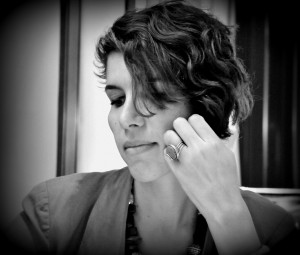
Soraya Morayef This essay engages with the work of Alaa Awad, a prolific Egyptian street artist who drew graffiti on the walls around Tahrir Square between 2011 and 2013 using ancient Egyptian styles and themes. In replicating pharaonic murals in a space that was literally the epicentre of the political uprising in Egypt, Awad provided a quintessentially Egyptian narrative of street protests, yet one that was also exotic and indecipherable to Egyptian spectators and passers-by, given his use of hieroglyphic codes and references to ancient Egyptian symbolism.
Published on Mar 22, 2013 Egypt's January 25 revolution helped bring out the best in raw and potent urban arts, most of all in the graffiti scene in Cairo. This short video gives a brief glimpse into the always evolving street art scene that has gone from strength to strength and become a valuable component in the creative resistance to Egyptian authorities and establishment. Produced by: Soraya Morayef Directed and Edited by: Marwan Imam Music by: Ahmed Safi Footage courtesy of: Islam Momtaz Soraya Morayef Amir Nazeer Farah Saafan Ian Lee Rodina Mikhail Carmel Alyaa Delshad Featuring the works of: The Sad Panda Kareem Gouda Ganzeer Charles Akl Amr Gamal Ammar Abo Bakr Mohamed El Moshir Laila Magued Alaa Awad Zeft Amr Nazeer Hozny Iyad Oraby Aref and Hoda Ismail Ahmed El Masry Saiko Manio Ahmed Abdallah KIM Shaza Khaled Alia El Tayeb El Teneen Hossam Shukrallah Ziad Tarek Mariam Abou Ghazi Youssef Bagato Saif Roshdy Mostafa el Tourkhy And many others who remain anonymous
Mural by Alaa Awad Africaseen blog, 2nd April 2013 by Susan Phillips While Soraya Morayef identifies herself as a writer and journalist, I see her through a different lens, as an artist and archivist. Through her photo blog documenting the extraordinary explosion of street art in Egypt following the initial Tahrir Square protests of January 2011, Morayef has captured, framed, and contextualized a fleeting moment in Egypt's long, proud history of artistic and cultural expression.