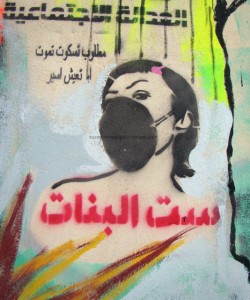
Sit El Banat, stencil tribute to the women who were beaten, dragged and stamped on by military forces in December 2011. Copyright Suzee in the City. 28 March 2013, africaisacountry.com Mickey Mouse is pulling apart a bomb: inside is the torso of George W. Bush, and they’re both looking perfectly happy about the whole thing. Soraya Morayef is taking a photo of the wall where these figures are painted, on a busy street in downtown Cairo, when a man walks up to her and asks her what the picture means.
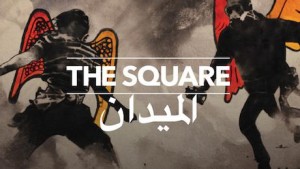
By Soraya Morayef Open Democracy, 25 March 2014 The author reviews the only documentary released to-date of the people's uprising in Egypt until the fall of Mohamed Morsi on 3 July 2013. There is no such thing as a comprehensive narrative of the Egyptian revolution. Anyone attempting such a thing will most likely fail, as the complex evolution of a people’s uprising to where Egypt is today cannot be summarised in one story, let alone a 108-minute film.
By Soraya Morayef Open Democracy, 13 November 2013 Many disregard the recurrent stories of prison deaths, police torture and rape because - on the other hand – Egypt's streets are empty after curfew and the walls are freshly painted; surely a clear indication that the state has succeeded in restoring security and defeating terrorism. On Tuesday November 5, Egypt’s Minister of Local Development, Adel Labib, announced a new law criminalizing graffiti with a maximum jail sentence of four years and a fine of 100,000LE.
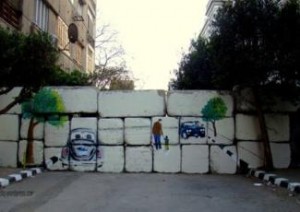
[A mural on Sheikh Rihan Street's wall. Image from the author.]By Soraya Morayef Jadaliyya, 22 May 2012 Around the corner from Tahrir Square, the heart of Egypt’s eighteen-day uprising, Mohamed Mahmud Street bears the scars of a turbulent political year in Egypt. The once-bustling street off of Tahrir Square has seen its share of violent battlefields--beginning with 28 January 2011 and ending with the February 2012 clashes following the Port Said massacre.
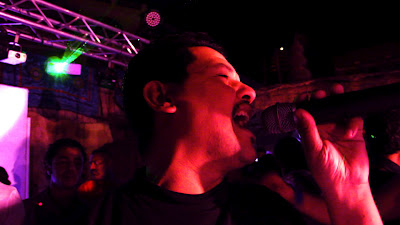
[/caption]By Soraya Morayef Jadaliyya, 29 May 2012 In the heated den of the Greek Club on Emad el-Din Street in downtown Cairo, sweating bodies heave and move to the infectious reggaeton fused with a tabla beat, as Amr Haha, DJ Figo, and Sadat swing their mics back and forth, bantering, ad-libbing, and cheering. One takes a swig out of his Stella, another dips the mic into the sea of eager hands as the jolly crowd sings along to the simple, lewd lyrics of “Aha el shibshib daa’!
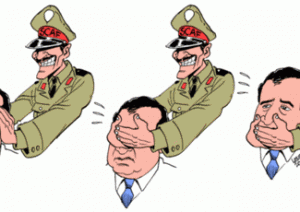
[Essam Sharaf and Army Generals. Cartoon by Carlos Lattuf. Image from Wikimedia Commons.]By Soraya Morayef 15 July 2012 Over the past sixteen months, much has been written about Egypt’s leaderless revolution, with many blaming its seeming sluggishness on the absence of a single figure to unite and represent the now fragmented revolutionary forces. To me, and perhaps others, Essam Sharaf was—however briefly—a potential candidate for this task. On 4 March 2011, right after his appointment as Egypt’s first post-revolution prime minister, Sharaf took the oath in Tahrir Square and spoke to thousands of protesters gathered in the area.
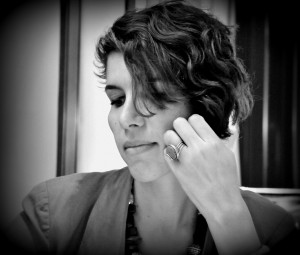
[Syrian author Khaled Khalifa. Image from Author]By Soraya Morayef Jadaliyya, 8 July 2014 [Last month, the Syrian novelist Khaled Khalifa visited London to promote ‘Syria Speaks’, an anthology of short stories, poems, articles and visual art collected as a response to the Syrian regime’s crackdown on dissident voices since the 2011 Syrian uprising. As one of the most powerful and prominent writers in Syria, Khalifa continues to live in Damascus – despite being attacked and beaten by regime thugs at a funeral in 2012, despite his hugely popular books being banned, and despite the very real risk that dissident voices face when they criticise Assad’s regime.
Hoda Elsadda This essay offers an analysis of issues related to the translation of memories of resistance of women who participated in protests since 2011 in Egypt for inclusion in a web archive created and managed by the Women and Memory Forum. It argues that stories and testimonies are powerful modes of activism in the struggle over the collective memory of a particular group or country. They complement and/or contest official narratives and potentially construct counter-narratives of dominant histories.
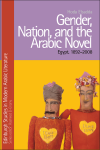
By Hoda Elsadda Edinburgh University Press Publication Date: Jul 2012 Dimensions: 234 x 156 mm Extent: 304 pages Series: Edinburgh Studies in Modern Arabic Literature A nuanced understanding of literary imaginings of masculinity and femininity in the Egyptian novel Gender studies in Arabic literature have become equated with women's writing, leaving aside the possibility of a radical rethinking of the Arabic literary canon and Arab cultural history.
Hoda Elsadda From: Journal of Middle East Women's Studies Volume 3, Number 2, Spring 2007 pp. 31-55 Abstract The emergence of the New Woman in Egypt as a central trope in the nationalist narrative of nation-building and modernity has been the subject of scholarly interest for more than a decade, yet there has been little research on her logical counterpart: the New Man. Although representations of the New Man have always been a subtext in representations of the New Woman, the manifestations and implications of these constructed imaginings within the Egyptian nationalist narrative have yet to be explored.