Special Issue of The Translator, November 2017 Guest Editors: Rita Queiroz de Barros University of Lisbon and University of Lisbon Centre for English Studies Karen Bennett New University of Lisbon and University of Lisbon Centre for English Studies Deadlines: 30 November 2015 (abstract) 30 September 2016 (article) The rise of English as an international world language has had a dramatic effect on the practice and effects of translation. In fact, as Stuart Campbell observed (2005: 27), whenever English is involved in the process there can be no illusion of parity between source and target languages.
By Charlotte Bosseaux Series: New Trends in Translation Studies - Volume 16 Year of Publication: 2015 Peter Lang, Oxford, Bern, Berlin, Bruxelles, Frankfurt am Main, New York, Wien, 2015. VIII, 242 pp., 3 tables ISBN 978-3-0343-0235-7 pb. (Softcover) Book synopsis Research on dubbing in audiovisual productions has been prolific in the past few decades, which has helped to expand our understanding of the history and impact of dubbing worldwide. Much of this work, however, has been concerned with the linguistic aspects of audiovisual productions, whereas studies emphasizing the importance of visual and acoustic dimensions are few and far between.
Middle Eastern Literatures Volume 13, Issue 2, 2010, pages 191-210 Special Issue: Arabic Literature in Egypt at the Beginning of the 20th Century in Search of New Aesthetics: Al-Muwaylihi and Contemporaries DOI: 10.1080/1475262X.2010.487317Samah Selim Along with Ponson du Terrail's Rocambole and Arthur Conan Doyle's Sherlock Holmes, Maurice Leblanc's Arsène Lupin is one of the most famous popular fiction figures in the 20th century Egyptian literary imaginary. The first Arabic translation of Arsène Lupin, Gentleman-Cambrioleur (1907) by essayist and translator ‘Abd al-Qādir Hamza was published in the Egyptian fiction serial The People's Entertainments (Musāmarāt al-sha‘b, 1904-1911) in 1910.
BY MLYNXQUALEY on MARCH 8, 2012 • ( 2 )
The “10 rules” series resumes with award-winning translator Dr. Samah Selim. Eleven Rules 1. Think about register. Every essay, novel or story projects a particular and unique language register. A really important part of translating fiction is capturing and rendering that register in English. It’s easy to fall into the trap of overly stiff or archaic prose on the one hand and too-easy colloquialisms on the other.
Samah Selim re-maps the journey of the early Arab novel
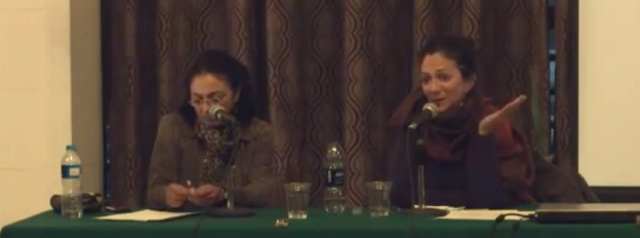
Friday, March 6, 2015 By Laura Gribbon, Jadaliyya Do stories need authors? Are texts fixed? Is adaptation a form of translation? These are some of the questions Professor Samah Selim has been considering in her study of Egyptian periodical Musamarat al-Shaab (The People’s Entertainment), and she raised them during a talk at the American University in Cairo last week.
Researching Collaborative Translation: An International Symposium
Centre for Translation, Hong Kong Baptist University
7-8 April 2016
CALL FOR PAPERS
**Deadline for submission of abstracts extended to 15 September 2015** For details, please refer to http://artisinitiative.org/events/artishongkong2016/. MORE UPDATES: Title and abstract of the keynote speech by Dr Julie McDonough Dolmaya (York University, Canada) as well as the title of the lectures by Prof Mona Baker (University of Manchester) and Dr Robert Neather (Hong Kong Baptist University) are as below: Keynote Speaker Dr Julie McDonough Dolmaya (York University, Canada) Title: Plugging the Gaps in Collaborative Translation Research Abstract: Translation has long been a collaborative activity, but technology has led to changes in how that collaboration takes place, allowing larger networks of translators to work together on massive, online texts.
PhD program in Politics, Public Policies and Globalization at the Department of Political Sciences of the University of Perugia, Italy. Candidates can apply within the terms established by the fellowship competition announcement available at http://www.unipg.it/files/pagine/720/dottorato_XXXI/Bando-XXXI-ciclo-inglese.pdf (deadline for application: 7 September 2015). One scholarship grant is reserved for international students. Candidates will have to submit a research proposal. This, as well as the PhD itself, can be written in English, though the candidate will need to be able to communicate in Italian.
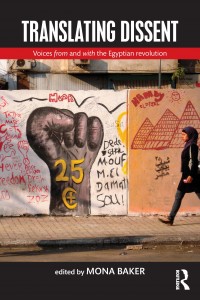
Despite having edited numerous books and journal issues over the past 20 years, I found this volume exceptionally challenging. The ups and downs, the uncertainty, and the upheaval that characterized the political landscape in which it was conceived permeated every aspect of the project: from persuading activists with more pressing concerns to invest in reflecting and writing about a relevant aspect of their experience, to constantly adapting the plan of the volume and having to identify new authors as a number of initial contributors – some either too traumatized by the events of the past two years or too busy attending to colleagues in prison, or both – were unable to find the mental space necessary to write.
This is a volume of uncommon urgency, intellectual range, and political importance. Translation, which occupies the crossing point of discourse and power and which affects all networks of word, image and sound, must now stand near the centre of any study of global activism. The richly diverse set of contributors, the activists and scholars, the creators and analysts, located in and out of Egypt, uncover both the conceptual depth and the social force in the contemporary tasks of the dissenting translator.