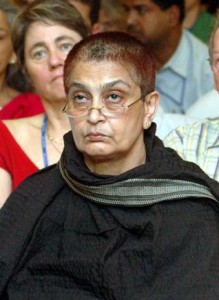
BULAN LAHIRI February 5, 2011, The Hindu Gayatri Chakravorty Spivak, considered by many to be the one of the world’s leading ‘Marxist-feminist-deconstructionists’, talks about notions of identity, her evolution as an intellectual and her present-day concerns. Excerpts from an exclusive interview... As I wait for Gayatri Chakravorty Spivak in her brand new office at New York’s ivy-league Columbia University where she is University Professor in the Humanities — the only woman of colour to be bestowed the University’s highest honour in its 264-year history — I admit I am nervous.
A portrait of the Chinese dissident-writer Liu Xiaobo at the Nobel Peace Center in Oslo. Mr. Liu was awarded the Nobel Peace Prize in 2010.Credit Espen Rasmussen for The New York Times The New York Times By Chris Buckley May 20, 2015 The works of the New York writer Paul Auster often hinge on ominous disappearances, and his novel “Sunset Park” has passages about the secretive detention of the Chinese dissident-writer Liu Xiaobo in 2008 and the efforts of the PEN American Center, a writers’ advocacy group, to secure his release.
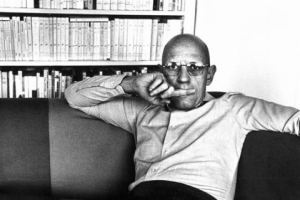
[embed]https://www.youtube.com/watch?v=V0URrVbpjW0&feature=youtu.be[/embed] Michel Foucault first arrived at the University of California, Berkeley in 1975. By this time, he was already a celebrity in France. He had just published his enormously influential history and critique of the penal system, Discipline and Punish, and he occupied a position at the prestigious Collège de France as chair in the “history of systems of thought,” a position he created for himself. But when he arrived on the West Coast, writes Marcus Wohlsen, “few at Berkeley had heard of Michel Foucault.
Centre for Translation, Hong Kong Baptist University 7-8 April 2016 CALL FOR PAPERS Collaborative translation, in a broad sense, refers to translation as a collective work. The concept draws attention to the interaction among agents involved in the process of translation – how translators work in teams under specific circumstances and within certain institutional structures, and how they work with other agents such as editors, consultants and experts in relevant fields.
Call for Articles—Alif 38, 2018
Guest-edited by Mona Baker
Abstract deadline: October 1, 2016
Article submission deadline: May 1, 2017
The point of departure for this special issue of Alif is that knowledge is ‘produced’ rather than ‘discovered’, and that translation is a core mechanism for the production and circulation of all forms of knowledge. This topic has received relatively limited attention in translation studies to date, and even less in related disciplines such as cultural studies and the history of ideas.
Michel Foucault (1926-1984) was an enormously influential French philosopher who wrote, among other things, historical analyses of psychiatry, medicine, the prison system, and the function of sexuality in social organizations. He spent some time during the last years of his life at UC Berkeley, delivering several lectures in English. And happily they were recorded for posterity:
Four Lectures on Truth and Subjectivity (1980) Six Lectures on Discourse and Truth (1983) Three Lectures on “The Culture of the Self” (1983) These last lectures are also available on YouTube (in audio format):
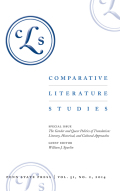
Special Issue of Comparative Literature Studies Volume 51, Number 2, 2014
Guest Editor: William J. Spurlin
Introduction The Gender and Queer Politics of Translation: New Approaches pp. 201-214 William J. Spurlin Articles A Queer and Embodied Translation: Ethics of Difference and Erotics of Distance pp. 215-230 Aarón Lacayo “Homme” peut-il vouloir dire “Femme”?: Gender and Translation in Seventeenth-Century French Moral Literature pp. 231-252 Pierre Zoberman Strategies of Translating Sexualities as Part of the Secularization of Eighteenth- and Early Nineteenth-Century Russia pp.
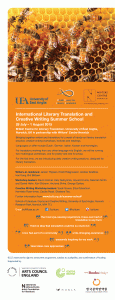
British Centre for Literary Translation, UEA, Norwich 26 July – 1 August 2015 The 2015 BCLT summer school will take place at the University of East Anglia and at Dragon Hall, flagship building for Norwich UNESCO City of Literature. Run by the British Centre for Literary Translation in partnership with Writers’ Centre Norwich, the summer school brings together writers and translators for an intensive, one-week, residential programme of hands-on translation and creative writing practice.
Date: 5-6 November 2015 Venue: University of Macau The Centre for Studies of Translation, Interpreting and Cognition (CSTIC) is pleased to announce the Call for Paper for the 2nd International Conference on Cognitive Research on Translation and Interpreting, to be held on 5-6 November 2015 at University of Macau, Macau SAR, China. This conference provides an international forum for the presentation and discussion of up-to-date research on translation, interpretation and cognition.
December 20th, 2013 Open Culture Michel Foucault first arrived at the University of California, Berkeley in 1975. By this time, he was already a celebrity in France. He had just published his enormously influential history and critique of the penal system, Discipline and Punish, and he occupied a position at the prestigious Collège de France as chair in the “history of systems of thought,” a position he created for himself.