BY MLYNXQUALEY on APRIL 20, 2015
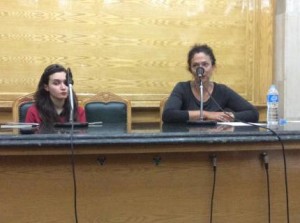
Samah Selim spoke at Cairo University last Thursday, at a talk moderated by Nada Abdel Sobhi, on “Why We Transate: Some Notes on Love, Loss, and Longing.” Mona Elnamoury was there:By Mona ElnamouryIn her talk at Cairo University last Thursday, Samah Selim charmed the audience with her hearty genuine talk about translation and love. Selim came to talk about translation in general as well as her current project: Arwa Saleh’s non-fiction book Al-Mubtasarun: dafatir wahda min gil al-haraka al-tullabiyya, which was published in 1997, the same year its author took her life.
The Oxford Comparative Criticism and Translation (OCCT) annual conference in collaboration with the European Humanities Research Centre (EHRC)
St Anne’s College Oxford, 1-3 October 2015
Call for papers:
Translation is prismatic when it produces multiple variants. This can happen in the process of a single translational act, or when a text is translated into different languages, or when it is translated into the same language several times. Our conference will explore all these aspects of the prism of translation in order to assess their origins, their effects and their potential.
BY BOUNDARY2 on FEBRUARY 19, 2015
an abstract by Lawrence Venuti Despite the increased attention that translation has received in conjunction with the newly revived topic of “world literature,” translation research and practice remain marginal in Comparative Literature as the field has developed in the United States. The evidence takes various forms, institutional and intellectual, including reports on the state of the field, the curricula of departments and programs, anthologies adopted as textbooks, and recent research that promulgates a discourse of “untranslatability.
Mona Baker is interviewed by Andrew Chesterman 2008. Cultus 1(1): 10-33. Click on the link below to download a copy of the interview. Baker Ethics of Renarration 2008 Opening question and answer quoted below. In lieu of an abstract. Chesterman: Your recent book Translation and Conflict. A Narrative Account (2006a) raises some interesting and important issues concerning the practice and ethics of translation and interpreting. You argue that translation is especially significant in conflict situations, and (like most human inventions, I suppose) can be used both for good and for ill.
Mona Baker Centre for Translation & Intercultural Studies School of Languages, Linguistics and Cultures University of Manchester, UK Published in the SKASE Journal of Translation and Interpretation, ISSN 1336-7811 Volume 1, Number 1, 2005 Abstract. This article questions one of the narratives that dominate our disciplinary and professional discourses on translation, namely the narrative of translation as a means of promoting peace, tolerance and understanding through enabling communication and dialogue to take place.
DOI:10.1080/0907676X.2015.1010551Federico Zanettina*, Gabriela Saldanhab& Sue-Ann Hardingc Received: 1 Jul 2014 Accepted: 14 Jan 2015 Published online: 10 Apr 2015 This paper investigates how subfields within translation studies have been defined and how research interests and foci have shifted over the years, using data from the Translation Studies Abstracts (TSA) online database. We draw on the notions of ‘landscape’ and ‘sketch maps’ in an attempt to reflect on the role that TSA editors, as well as writers of papers and abstracts, have had on the dynamics of the field.
Shanghai Jiao Tong University, Shanghai, China
25-27 March 2016
Hosted By: The Centre for Translation and Intercultural Studies, School of Foreign Languages, Shanghai Jiao Tong University
**CALL FOR PAPERS** • Draft Programme • Abstracts • Venue • Registration • Organisers
Keynote speakers and workshop leaders:
Prof. Jens Brockmeier (The American University of Paris, France) Prof. Mona Baker (University of Manchester, UK) Dr. Sue-Ann Harding (Hamad bin Khalifa University, Qatar)
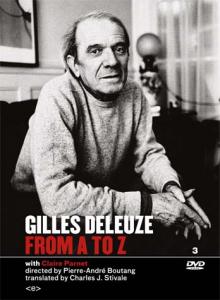
Gilles Deleuze's ABC Primer, with Claire Parnet, Directed by Pierre-André Boutang (1996) Full reference to published set of DVDs: Deleuze, Giles (1996/2011) Gilles Deleuze from A-Z, with Claire Parnet, directed by Pierre-André Boutang, translated by Charles J. Stivale, Cambridge, MA: MIT Press. Overview prepared by Charles J. Stivale, Romance Languages & Literatures, Wayne State University A as in Animal, B as in 'Boire' <Drink>, C as in Culture, D as in Desire, E as in 'Enfance' <Childhood>, F as in Fidelity, G as in 'Gauche' <Left>, H as in History of Philosophy, I as in Idea, J as in Joy, K as in Kant, L as in Literature, M as in 'Maladie' <Illness>, N as in Neurology, O as in Opera, P as in Professor, Q as in Question, R as in Resistance, S as in Style, T as in Tennis, U as in 'Un'/One, V as in 'Voyage'/Trip, W as in Wittgenstein, X,Y as unknown, Z as in Zigzag DeleuzeA-Z Downloaded fromhttp://truthbeauty.
To be circulated... The International Association for Translation and Intercultural Studies (IATIS) has held four conferences so far: Seoul in 2004, Cape Town in 2006, Melbourne in 2009, and Belfast in 2012. The organisation of the 5th IATIS Conference, to be held in Belo Horizonte in July 2015, is now well underway, and already we’re turning our attention to the 6th IATIS Conference, which is to be held in July or August 2018.
Tower of Babel, by Lucas van Valckenborch, 1595 Translation is not the art of failure but the art of the possible.
Benjamin Paloff April 7, 2015 The Nation The task of the translator, to borrow the title of what is probably the twentieth century’s single most influential commentary about the goal of translation, is to create a text that improves upon the original. In all fairness to Walter Benjamin, this is not what he says in “The Task of the Translator.