International Conference organized by the Centre for Literature in Translation of the Vrije Universiteit Brussel and Ghent University, in cooperation with the University of Santiago de Compostela and the Federal University of Santa Catarina.
Venue: Vrije Universiteit Brussel, December 10-11, 2015
Bringing together scholars from different disciplines such as cultural studies, translation studies, area studies, comparative literature and anthropology, this conference aims at providing a new understanding of exile as a theoretical concept, analytical category, and lived experience in the study of the translation of (literary) texts.
Translation Studies
Volume 8, Issue 1, 2015, pages 48-62
DOI: 10.1080/14781700.2014.921238 Serena Bassi
This article considers the construction of the literary fame of Roberto Saviano, author of the 2006 Italian bestseller Gomorra, in the British book marketplace. In order to understand the political import of Saviano's translated author-brand, this analysis utilizes the tools of narrative theory to look at what narratives were created around the authorial personality and what other public narratives and meta-narratives are mobilized to introduce the author to his new reading public.
Amelia Barikin, Nikos Papastergiadis, Audrey Yue, Scott McQuire, Ross Gibson; Xin Gu Journal of Intercultural Studies 2014, Vol. 35, No. 4, 349–365. Translation is a key concept for interpreting cross-cultural exchanges. In this article, we track the development of an artistic project that we developed in conjunction with Federation Square Melbourne and Art Centre Nabi in Seoul. It involved the performance of a live telematic dance that occurred in both cities and was transmitted via the use of large screens.
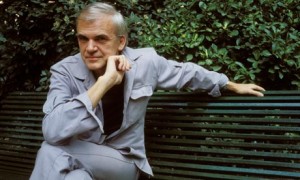
Milan Kundera fears translation could make his style banal. Photograph: Lochon Francois/Gamma/Camera Press LOCHON FRANCOIS/GAMMA/CAMERA PRESS It's time to acknowledge translators – the underpaid and unsung heroes behind the global success of many writers The Observer Tim Parks, Sunday 25 April 2010
Who wrote the Milan Kundera you love? Answer: Michael Henry Heim. And what about the Orhan Pamuk you think is so smart? Maureen Freely. Or the imaginatively erudite Roberto Calasso?
Edited by Claudia V. Angelelli, Brian James Baer Routledge – 2015 – 288 pages
Paperback: $39.95 978-0-415-73254-3
April 30th 2015 Available for pre-order Hardback: $150.00 978-0-415-73253-6 April 30th 2015 Available for pre-order This volume offers a comprehensive view of current research directions in Translation and Interpreting Studies, outlining the theoretical concepts underpinning that research and presenting detailed discussions of the various methods used. Organized around three factors that are responsible for shaping the study of translation and interpreting today: post-positivist theoretical approaches, developments in the language industry, and technological innovations, this volume is divided into three parts: Part I introduces the basic concepts organizing translation and interpreting research, such as the difference between qualitative and quantitative research, between product-oriented and process-oriented studies, and between prescriptive and descriptive approaches.
David Charlston Radical Philosophy 186 (Jul/Aug 2014)
David Charlston Most branches of philosophy and many other disciplines in the humanities and social sciences studied in the anglophone academy draw on texts written in languages other than English and therefore rely on the products of translation, especially translations of historical, European philosophy. However, surprisingly little philosophical attention has been paid to the role of individual translators in mediating and relocating philosophical narratives across cultural and linguistic boundaries.
Talking to the World 2 (TTTW-II) International Conference for Translation and Interpreting Studies 10-11 September 2015 Newcastle University, United Kingdom
Following the success of the first Talking to the World Conference in 2013, we are pleased to announce this call for papers for the second Talking to the World conference on The Relevance of Translation and Interpreting – Past, Present and Future, which will take place at Newcastle University, UK, on 10-11 September 2015.
Linguistica Antverpiensia, No 13 (2014) Multilingualism at the cinema and on stage: A translation perspective Adriana Şerban & Reine Meylaerts Table of Contents Introduction Introduction PDF Reine Meylaerts, Adriana Şerban Articles La parole aux images, ou Multilinguisme et traduction dans les films de John McTiernan PDF Sylvain Agiboust Narratives of Translation and Belonging in Multilingual Performance: The Case Study of 20/20 PDF Jozefina Komporaly Bilingual performance and surtitles: translating linguistic and cultural duality in Canada PDF Louise Ladouceur « Words are not simple play things!
CALL FOR PAPERS Rethinking Hegemony and Domination in Translation Special Issue of Target – International Journal of Translation Studies Guest edited by Stefan Baumgarten and Yan Ying (Bangor University, Wales, UK), and Jordi Cornellà-Detrell (Glasgow University) Rationale While there is no doubt that the ‘ideological’ and ‘power turn’ have reshaped the discipline of Translation Studies, much work still needs to be done in order to fully understand the ontological and epistemological underpinnings of the impact of ideology and power on the theory and practice of translation.
By Geoff Watts
Dec 1 2014 One morning this summer I paid a visit to the sole United Nations agency in London. The headquarters of the International Maritime Organization (IMO) sit on the southern bank of the Thames, a short distance upstream from the Houses of Parliament. As I approached, I saw that a ship’s prow, sculpted in metal, was grafted like a nose to the ground floor of this otherwise bland building.