CALL FOR PAPERS An International Conference on New Horizons in Translation Technology 24-25 April 2015 Organized by Master of Arts in Computer-aided Translation Programme Department of Translation The Chinese University of Hong Kong
The MACAT Programme is pleased to announce the holding of an international conference on “New Horizons in Translation Technology”, which will take place at The Chinese University of Hong Kong on 24-25 April 2015. This conference focuses on two main areas: New Frontiers in the Research on Translation Technology and New Frontiers in Translation Software Development.
The world’s most powerful computers can’t perform accurate real-time translation. Yet interpreters do it with ease. Geoff Watts meets the neuroscientists who are starting to explain this remarkable ability. 18 November 2014 Geoff Watts
One morning this summer I paid a visit to the sole United Nations agency in London. The headquarters of the International Maritime Organization (IMO) sit on the southern bank of the Thames, a short distance upstream from the Houses of Parliament.
Ofcom: Results from the Second Sampling Exercise 5 November 2014 This document is the second of four reports on the quality of live subtitling in British television programmes, based on samples drawn from live-subtitled programming broadcast in April and May 2014 by the BBC, ITV, Channel 4, Channel 5 and Sky. In order to address continuing complaints about the quality of live subtitling, Ofcom consulted in May 2013 on proposals to incentivise broadcasters and access service providers to identify and act upon areas for improvement.
Call for Papers
The Cultural Politics of Translation
A 3-day international conference to be held in Cairo, Egypt
27-29 October 2015
Organised by
Department of English Language and Literature, Cairo University, Egypt
& Centre for Translation and Intercultural Studies, University of Manchester, UK
Supported by
The British Academy
https://culturalpoliticstranslation2015.wordpress.com/
Translation plays an important role as a powerful medium of representation, especially in a world of intensified cultural and technological interaction. It is a complex process that involves not only the transfer of texts across languages and cultures, but also the exercise of a politics and ethics of representation that reflect the positionality of the translator and are embedded in structures of authority as well as specific ideological and technological environments.
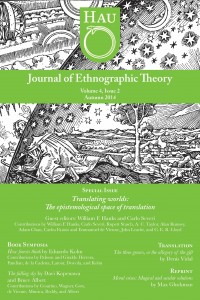
Special Issue of the Journal of Ethnographic Theory Volume 4, Issue 2, 2014 Guest Editors: William P. Hanks and Carlo Severi Table of Contents Special Issue - Introduction Translating worlds: The epistemological space of translation William F. Hanks, Carlo Severi PDF 1–16 Special Issue - Articles The space of translation William F. Hanks PDF 17–39 Transmutating beings: A proposal for an anthropology of thought Carlo Severi PDF 41–71 Powers of incomprehension: Linguistic otherness, translators, and political structure in New Guinea tourism encounters Rupert Stasch PDF 73–94 Healing translations: Moving between worlds in Achuar shamanism Anne-Christine Taylor PDF 95–118 Bilingual language learning and the translation of worlds in the New Guinea Highlands and beyond Alan Rumsey PDF 119–140 Culinary subjectification: The translated world of menus and orders Adam Yuet Chau PDF 141–160 Acting translation: Ritual and prophetism in twenty-first-century indigenous Amazonia Carlos Fausto, Emmanuel de Vienne PDF 161–191 Special Issue - Colloquia Words and worlds: Ethnography and theories of translation John Leavitt PDF 193–220 Special Issue - Forum On the very possibility of mutual intelligibility G.
Edited by Geraldine Brodie, Elena Davitti, Sue-Ann Harding, Dorothea Martens, David Charlston, M. Zain Sulaiman, Alice Casarini, Gloria Kwok Kan Lee TABLE OF CONTENTS Editorial Geraldine Brodie, Elena Davitti, Sue-Ann Harding, Dorothea Martens, David Charlston, M. Zain Sulaiman, Alice Casarini and Gloria Kwok Kan Lee [Editorial] i-v ARTICLES Chaucer Abducted: Examining the Conception of Translation behind the Canterbury TalesJames Hadley, University of East Anglia, UNITED KINGDOM [Abstract] [Article] 1-24 The ‘Permanent Unease’ of Cultural Translation in the Fiction of Guillermo Fadanelli Alice Whitmore, Monash University, AUSTRALIA [Abstract][Article] 25-53 Face Management in Literary Translation Yuan Xiaohui, University of Bristol, UNITED KINGDOM [Abstract][Article] 54-95 Jacques Lacan and the Intrinsic (Un)translatability of Names: “Name” in the English-Chinese Translation of Winterson’s Art & Lies Franziska Cheng, Chinese University of Hong Kong, CHINA [Abstract][Article] 96-119 Integrative Complexity: An innovative technique for assessing the quality of English translations of the Qur’an James W.
DOI: 10.1080/14781700.2014.943677Panagiotis Sakellariou Published online: 27 Aug 2014, in Translation Studies, Taylor & Francis The present article offers a critical account of key applications of the concept of intertextuality for translation-theoretic purposes. It is argued that these applications form part of a reorientation in Western translation studies that involves a significant reconceptualization of both the practice of translation and the role of the translator. Seen from this perspective, the translation-theoretic appropriation of the concept of intertextuality presents itself as a particular moment of a reshaping process in the development of the discipline.
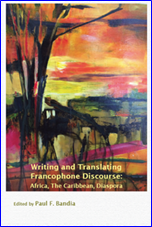
Edited by Paul F. Bandia Amsterdam/New York, NY 2014. VII, 235 pp. (Textxet 78) ISBN: 978-90-420-3894-3 Paper €52,-/US$73,- ISBN: 978-94-012-1176-5 E-Book €47,-/US$66,- Online info: http://www.rodopi.nl/senj.asp?BookId=TEXTXET+78 This book is a much needed contribution to interdisciplinary research on the intersection of French and Francophone Studies and Translation Studies. It highlights the symbiotic relationship between the two disciplines whereby theories and concepts developed in translation studies provide useful models and paradigms for studying francophone literature, while major concepts that hold sway in the francophone world provide a solid basis for elucidating and understanding translation phenomena.
University of Liege, 7-9 May 2015 The words ‘translation’ and ‘politics’ are so frequently used in a metaphorical sense that it can be safely claimed both that everything depends on translation and that everything is involved in politics. It is clear, however, that from the beginning the two fields, as indeed language and power, are closely related. Translation is about understanding the other and being understood, or better about conveying a message which will often be reshaped to fit a purpose, whether it be marketing, negotiations, projected expectations of a target audience, when not straightforward propaganda.
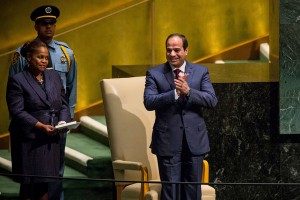
President Abdel Fattah el-Sisi of Egypt preparing to deliver a speech to the United Nations General Assembly last month. Credit Andrew Burton/Getty Images By THE NEW YORK TIMES OCT. 15, 2014 There is no such thing as bad press for President Abdel Fattah el-Sisi, at least not if it is translated by Al Ahram, Egypt’s flagship state newspaper.
A recent report in The New York Times described the muted reaction to Mr.