First Forlì International Workshop Department of Interpreting and Translation, University of Bologna Forlì, Italy, 7-8 May 2015 More than 15 years have passed since the late Miriam Shlesinger called upon the Interpreting Studies community to embrace corpus-based methodologies (Shlesinger 1998). Corpus-based methodologies enable researchers to collect empirical data in quantities large enough to make reliable generalizations about interpreter performance (as opposed to studies based on anecdotal evidence); moreover, they also make it possible to analyse relevant phenomena on greater data sets than is usually the case when "
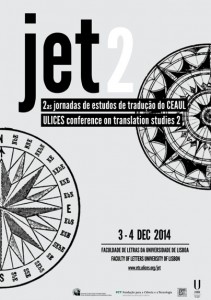
2nd ULICES Conference on Translation Studies – JET2
Venue: Faculty of Letters, University of Lisbon
Date: 3-4 December 2014
Keynote Speakers Abram De Swaan, University of Amsterdam, The Netherlands
Stefania Taviano, University of Messina, Italy
Call For Papers The rise of English as an international world language has had a dramatic effect on the practice of translation in all domains.
Innovation Paths in Translation and Intercultural Studies Call for Presentations
(papers, roundtables, workshops, “rapid fire” PhD presentations, and posters)
Deadline: 10th of September 2014
Following successful conferences in Seoul (2004), Cape Town (2006), Melbourne (2009) and Belfast (2012), IATIS is delighted to announce its call for panel, paper, roundtable, workshop, “rapid fire” PhD presentations and poster proposals for its fifth conference, which will be held at Universidade Federal de Minas Gerais (UFMG), Brazil, from 7th to 10th July 2015.
A three-day conference to be held in Cairo, 6-8 March 2015 Funded by the Arts & Humanities Research Council, UK Organized by Mona Baker, Yasmin El Rifae, and Mada Masr http://globalizingdissent.wordpress.com Activists from various regions and countries connect with and influence one another through practices involving various types of translation, including video subtitling, written translation, and oral interpretation. The Egyptian Revolution and the activists and collectives who have worked to move it forward have been highly visible to other protest movements in large part through such practices.
06 2008, translate.eipcp.net editorial Rada Iveković Translating Borders Hito Steyerl Politics of the archive Jon Solomon Rethinking the Meaning of Regions Gayatri Chakravorty Spivak More Thoughts on Cultural Translation Encarnación Gutiérrez Rodríguez "Lost in Translation" - Transcultural Translation and Decolonialization of Knowledge Boris Buden A Tangent that Betrayed the Circle Sandro Mezzadra / Brett Neilson Border as Method, or, the Multiplication of Labor Tom Waibel Privateers in the Sea of Signs Klaus Neundlinger Simultaneous – From Wage Form to Space Form?
11 2007, translate.eipcp.net Editorial Translating Violence/Traduire le silence de la plèbe Jon Solomon Translation, Violence, and the Heterolingual Intimacy Sandro Mezzadra Living in Transition: Toward a Hetrolingual Theory of the Multitude Rita Kothari Diffusing Polarizations: Language and Translation at the Time of the Gujarat Riots Min Dongchao Translation as Crossing Borders: A Case Study of the Translations of the Word ‘Feminism’ into Chinese by the CSWS Joyce Chi-Hui Liu Logics of Ethos and the translations of Unheimlich: Wu Tianzhang and the Post-Martial Law Era in Taiwan Anna Nadotti In the infinite labour of translation an impossible map emerges.
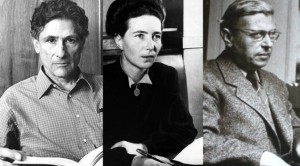
AUGUST 26, 2014 EUGENE WOLTERS In 1979, Edward Said was invited by Jean-Paul Sartre and Simone de Beauvoir to France for a conference on Middle East peace. It was in the wake of the Camp David Accords that ended the war between Egypt and Israel, that the author of “Orientalism” and ardent supporter of the Palestinian people, was invited to contribute with other prominent thinkers.
Said offered effusive praise for Sartre when recounting his adventure, writing for the London Review of Books:
Nineteen thought-provoking essays on the art of translation and its ability to help us understand other cultures and ways of thought by award-winning translators and publishers. Includes recommendations by the essayists of translations that they enjoyed reading. 88 pp. 2014
Download: The Art of Empathy Translation.pdf
Table of Contents Preface by NEA Chairman Jane Chu ............................................... i Introduction by NEA Literature Director Amy Stolls .
Translators/Interpreters (T/Is) contracted to work in conflict zones are often non-professional linguists yet play a key role in communications. Operating in high-risk environments, they are extremely vulnerable and require special protection both during and after the conflict. Users of T/I services must be aware of their responsibilities to T/Is and of the need to continuously protect them. At the same time, T/Is themselves must know their rights as well as uphold the standards and ethics of the language profession to enhance their safety and standing.
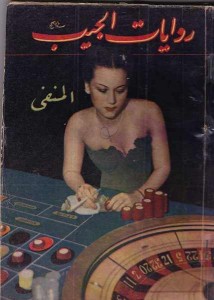
Pocket Novels: The Exile, J. Kessel, 1940. “A Novel of Human Untruths, about a Russian woman and her princesses, in exile, from the pen of the great French writer J. Kissel,” presumably the French novelist and journalist Joseph Kessel (1898-1979) August 20, 2014 | by Jonathan Guyer Cairo: the metal detector beeps. The security man wears a crisp white uniform. He nods and leans back in his chair. The lobby’s red oriental carpet, so worn it’s barely red, leads upstairs to the hotel tavern.