Lucas Klein LUCAS KLEIN Comparative Literature is defined in part by anxiety about its institutionality. Approaching translations as works of literary scholarship equivalent to our articles and monographs can address this anxiety and also work against the Herderian assumptions of national literatures. Ultimately, the comparison of comparative literature is a metaphorical process, putting it in the same process of negotiated familiarity and strangeness as translation. In this way, institutionalizing translation might help us de-institutionalize our other institutions.
Deadline for applications: 15 September 2014 ARTIS, or Advancing Research in Translation and Interpreting Studies, is a new research training initiative in the broad area of translation and interpreting studies. The training we offer is designed to help researchers to improve their research skills and methods, to set up and manage research projects effectively, and to negotiate and apply theoretical models. In providing training along these lines ARTIS seeks to contribute to the enhancement of translation and interpreting research quality in general.
12-13 December 2014 Center for Translation Studies, University of Vienna Gymnasiumstraße 50 1190 Vienna Call for Papers The Center for Translation Studies at the University of Vienna is organizing a two-day symposium in December 2014 to bring together Eastern European traditions and scientific reflections on Translation (Studies). It seeks to understand how the discipline and scientific thinking on it has evolved in this region as Translation Studies appears to be dominated by Western, especially Western European, traditions.
A cura di: Miller, Donna Rose ; Monti, Enrico (2014) Bologna: Centro di Studi Linguistico-Culturali (CeSLiC), DOI 10.6092/unibo/amsacta/4030. In: Quaderni del CeSLiC. Atti di Convegni (3). Documento PDF Available under License Creative Commons Attribution Non-commercial (CC BY-NC 3.0). 3899Kb URL ufficiale: http://www3.lingue.unibo.it/ceslic/ Abstract Tradurre Figure / Translating Figurative Language offers 30 original contributions on the interlingual translation of figurative language. The chapters were first presented at an international conference held at the University of Bologna in December 2012 and have been selected through a double peer-reviewed process.
Department of Translation and Interpreting Studies Boğaziçi University, Istanbul 27-28 November 2014 The standard definitions of "translation" commonly refer to transfer processes from one language into another or to the end product of such a transfer. However, translation is not only an interlingual and intercultural phenomenon. Translation also occurs within the "same" linguistic and cultural domain. One example of intralingual translation is the numerous varieties of expert-to-layperson communication where the sophisticated language of the text needs to be simplified for the layperson.
Full title of the edited collection: Translating Conflict: Ethics and Ideology in Public Service Interpreting and Translation As the 21st century advances, Public Service Interpreting and Translation (PSIT) services are increasingly positioned at the service of conflict resolution in different contexts, while at the same time being locked in their own struggle for professional recognition. Building on the 5th International Conference in Public Service Interpreting and Translation held at the University of Alcalá, Madrid, in April 2014: (Re-) visiting Ethics and Ideology in Situations of Conflict, this Collection addresses themes of conflict, conflict resolution, reparation and social justice at the domestic and international levels.
The Centre for Legal and Institutional Translation Studies (Transius) of the University of Geneva will hold its first international conference from 24 to 27 June 2015. The 2015 Transius Conference will combine two complementary events: a conference on Law, Translation and Culture (LTC5) organised in collaboration with the Multicultural Association of Law and Language (MALL), and a legal and institutional translation seminar organised in collaboration with IAMLADP’s Universities Contact Group (UCG).
Deadline: August 31st, 2014 Gulf Coast is now accepting entries for the inaugural Gulf Coast Translation Prize. In 2014, the contest is open to poetry in translation. The winner receives $1,000 and publication in the journal. Two honorable mentions will also appear in issue 27.2, due out in April 2015. All entries will be considered for paid publication on our website as Online Exclusives. This year’s contest will be judged by Jen Hofer.
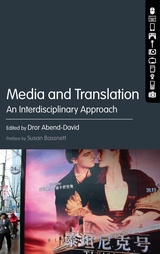
Edited by Dror Abend-David Over the last decade there has been a dramatic increase in publications on media and translation. In fact, there are those who believe that so much has been published in this field that any further publications are superfluous. But if one views media and translation as anything ranging from film and television drama to news-casting, commercials, video games, web-pages and electronic street signs, it would seem that research in media and translation has barely scratched the surface.
Translation & Interpreting: International Journal of Translation & Interpreting Research Today multilingualism and multiculturalism have become common features of countries and societies worldwide. This striking development has major consequences for the way institutions function and guarantee human rights. It also impacts on how and whether citizens and populations can exercise their human rights and avail themselves of social and public services. The way in which different societies and their policy-makers have been coping with the diversity of their populations differs, but there is growing awareness across the globe of the need to address these issues.