Yasmin El-Rifae
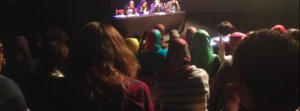
June 12th, 2015, Muftah I walked through downtown Cairo on a quiet Friday morning in March 2015, late to a conference I had helped organize and a little bit anxious. The conference was about the political importance of translation – of language and concepts – in connecting protest movements to one another and allowing them to be narrated from within. We had tried to make the conference sound mundane to state authorities, who had issued our permits, but I was not entirely sure it would work.
By Ahmed Refaat Mada Masr, 15 March 2015 I first heard Mona Baker two months ago in a workshop organized by the Imaginary School Program at Beirut, the art space not the city. It was called: “Prefigurative politics and creative subtitling.”
During the three-hour event, Baker briefly summed up what she discusses more elaborately in her research project, “Translating the Egyptian Revolution,” which “examines the language-based practices that allow Egyptian protesters to contest dominant narratives of the revolution and, importantly, to connect with, influence and learn from global movements of protest.
Sunday, January 25, 2015 Yasmin El-Rifae Yesterday they shot and killed a woman on Talaat Harb Street. She was walking, along with other members of the Socialist Alliance Party, through downtown to commemorate those killed since all of this started four years ago. Many of them were carrying flowers, wreaths to lay in Tahrir. Photos of Shaimaa Sabbagh in various contexts before her death have been widely shared online.
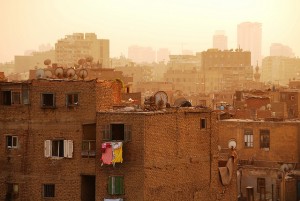
August 14, 2014 A year after the Raba’a massacre in Cairo, one writer struggles to redraw her relationship to the city By Yasmin El-Rifae A year ago I woke up in Cairo to the news of a massacre, the second of the summer. I was subletting a friend’s apartment downtown, a beautiful place that gave me solitude above the blazing, dense insanity below while keeping me close to the small geography of my social life.